澳洲政府推動購屋,為何讓無家者更多Not As Safe As Houses: Why the Push for Homeownership Increases Homelessness
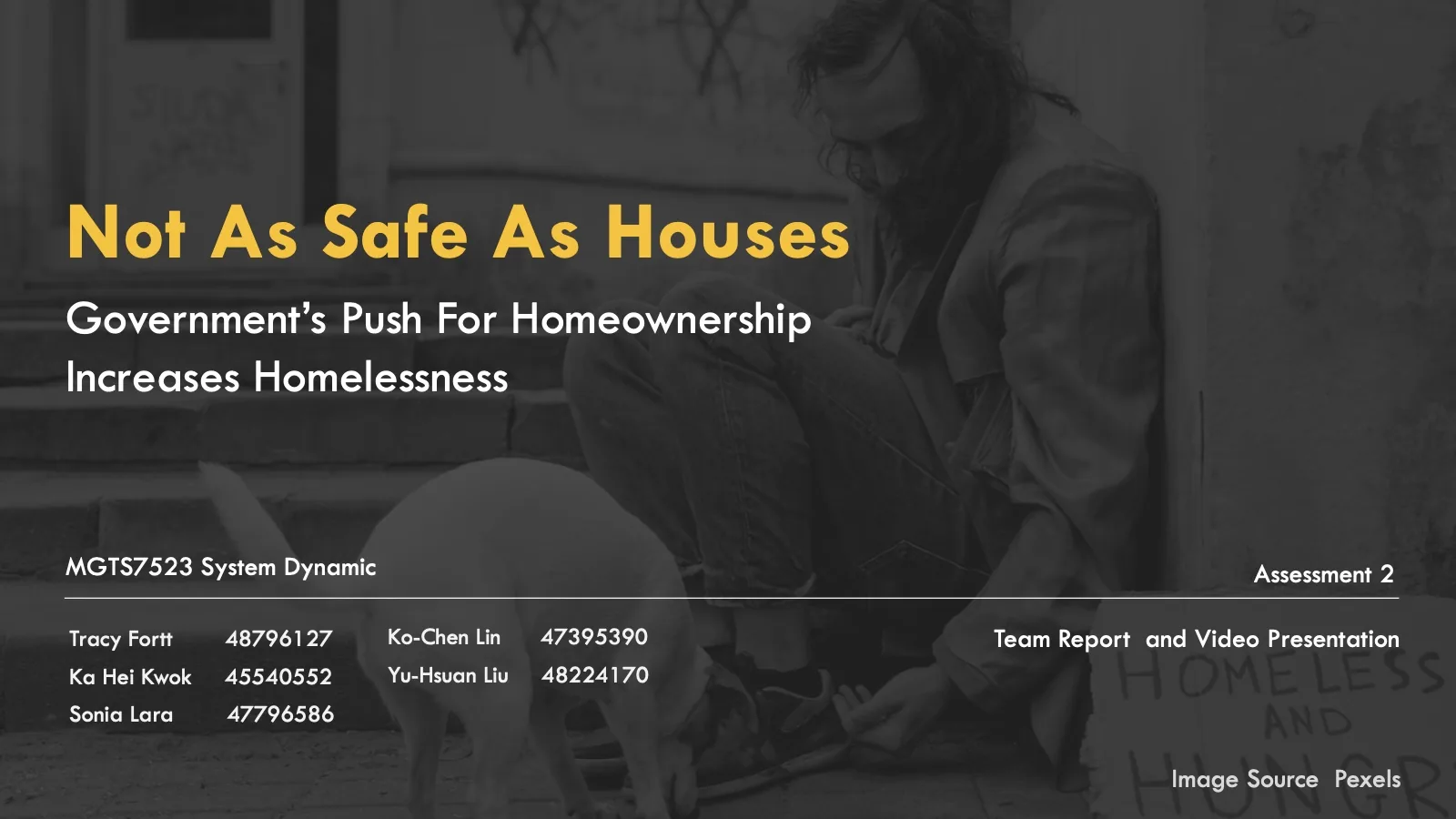
課程專案簡介Course project overview
在昆士蘭大學 System Dynamics 課程中,我們用系統動力學分析澳洲的住房危機:為什麼政府一路推動購屋、借助私人市場提供租屋,無家可歸的人卻越來越多?我們依照 Sterman 系統方法的前兩步:問題陳述與動態假說,找出澳洲社會住宅短缺背後的回饋結構,並提出政策建議。
In UQ’s System Dynamics course, we used system dynamics to analyse Australia’s housing crisis: why does homelessness keep rising even as governments push homeownership and lean on the private market to supply rentals?Following the first two steps of Sterman’s Systems Method — problem articulation and the dynamic hypothesis — we uncovered the feedback structure behind Australia’s social housing shortage and proposed policy recommendations.
標題同樣改寫自英文諺語 as safe as houses(像房子一樣安穩),加上 Not,點出在政策失靈下,房子已不再是安穩的保證。同一學期,我也在 Marketing for Social Change 課程以同一句諺語做了 As $ave as Houses:那是從個人行為切入的下游解法,這門課則從制度與政策看上游的成因。
The title again plays on the idiom “as safe as houses” — adding Not to say that, with policy failing, a house is no longer a guarantee of security.In the same semester, I used the same idiom for As $ave as Houses in Marketing for Social Change: that project tackled the problem downstream through individual behaviour, while this one examines the upstream causes in institutions and policy.
問題陳述Problem articulation
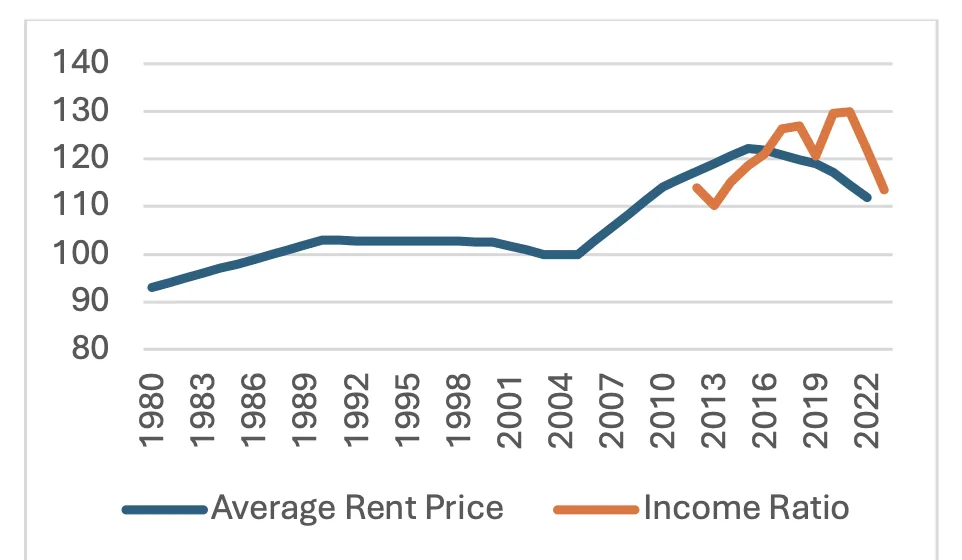
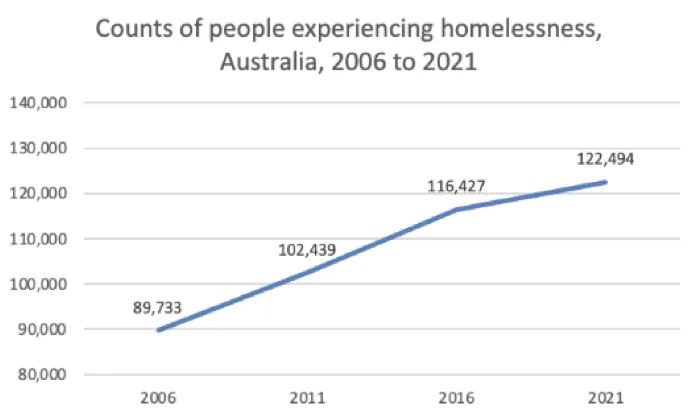
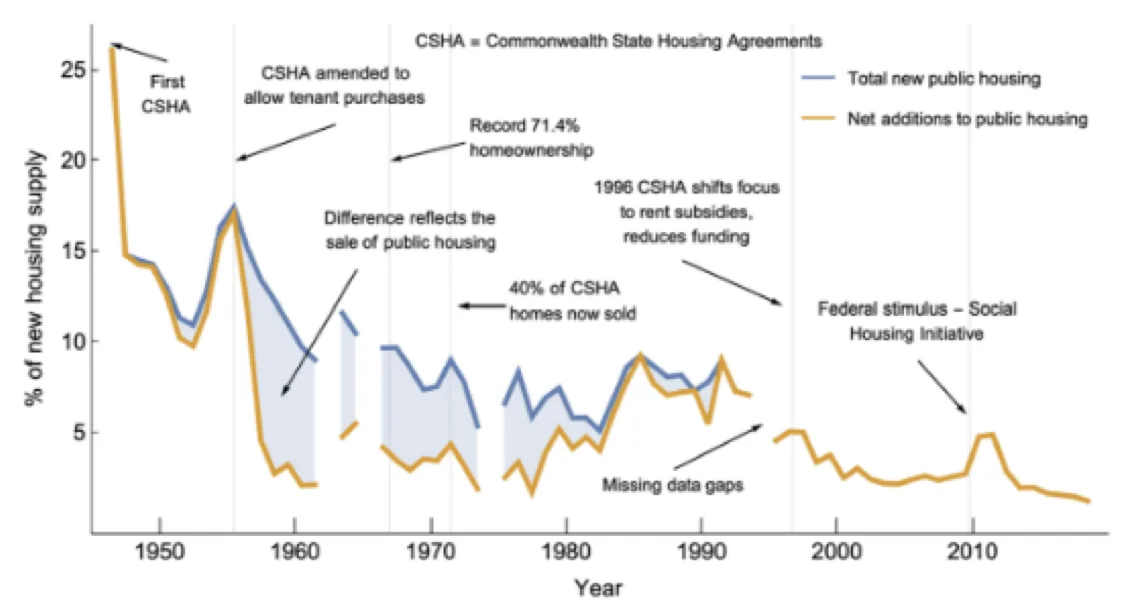
澳洲每晚有 122,494 人無家可歸,自 2006 年起快速增加,超過一半的原因是負擔不起住房。與此同時,社會住宅在新增住宅中的比例,從 1945 年的 25% 一路降到 2013 年後只剩 2%。1980 年後,政府透過財政與貨幣政策推動住宅私有化,倚賴私人市場提供租屋,但投資者以獲利為優先,推升了租金。
On any given night, 122,494 people in Australia are homeless — a number that has climbed rapidly since 2006, with housing unaffordability behind more than half of cases.Meanwhile, social housing’s share of new housing supply fell from 25% in 1945 to just 2% after 2013.From 1980, governments used fiscal and monetary policy to privatise housing and relied on the private market to supply rentals — but investors put profit first, driving rents up.
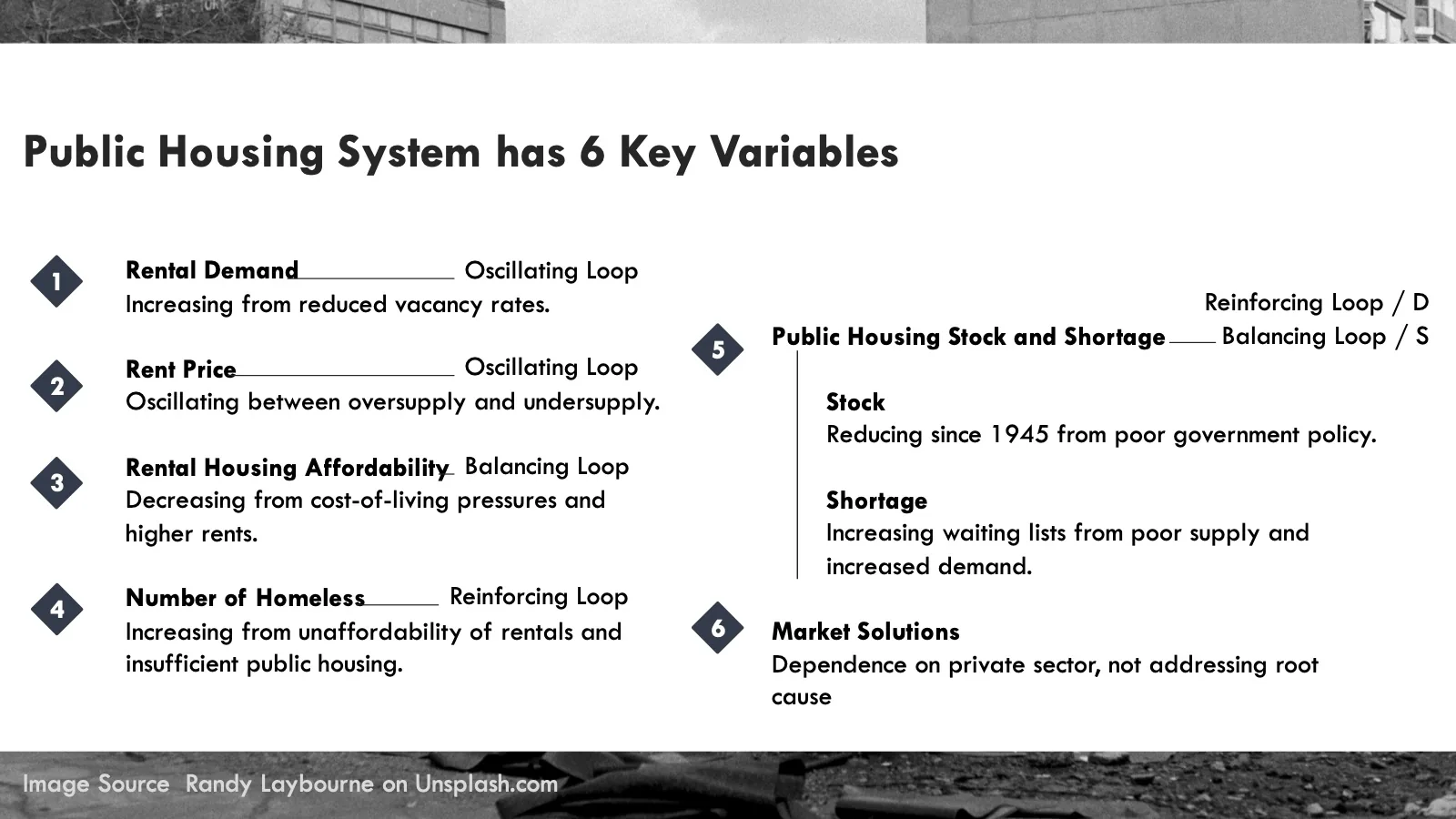
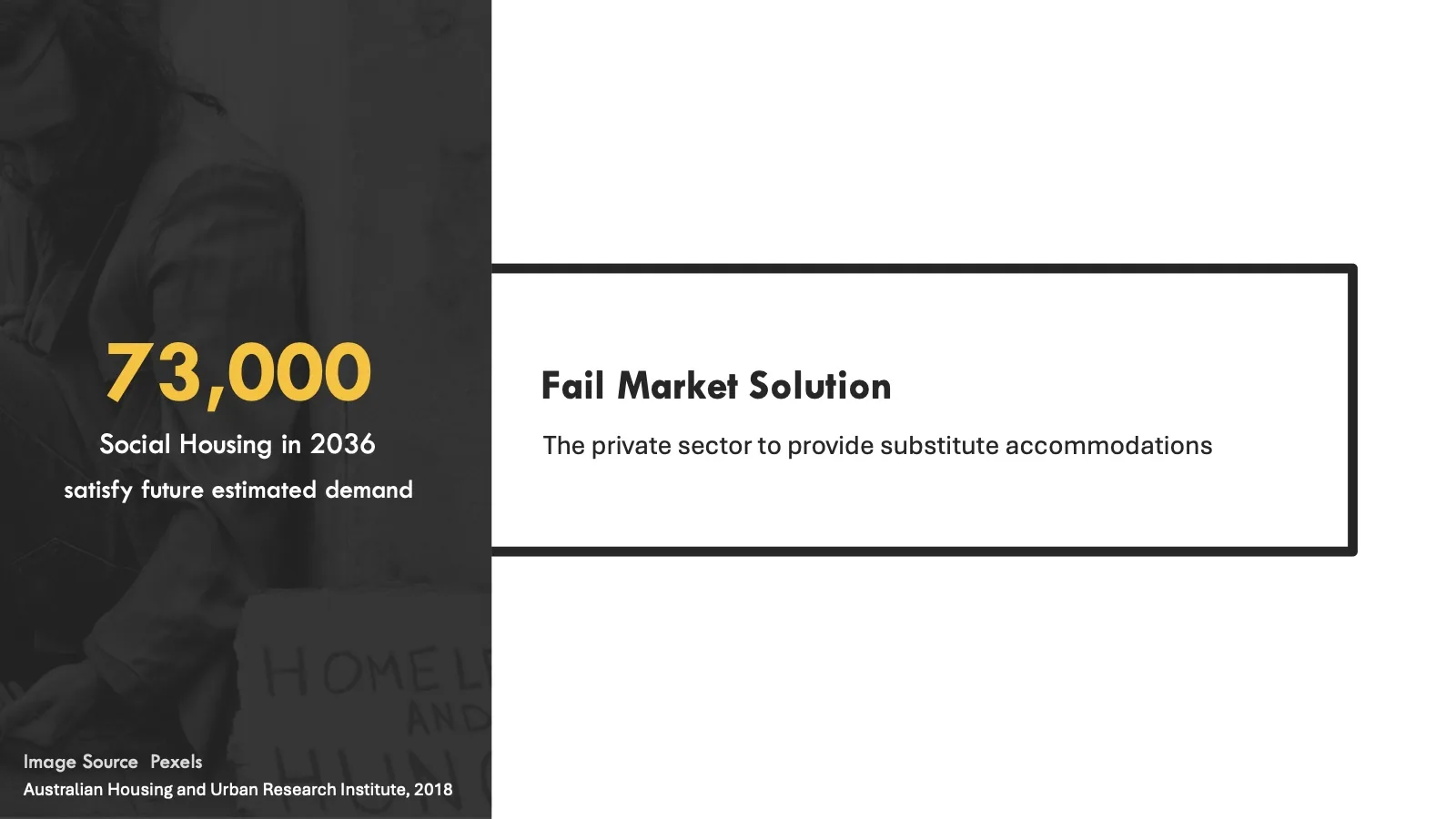
我們把分析範圍設定為全澳洲,時間軸從 1980 年到 2036 年:屆時澳洲人口預計達 3,009 萬,需要 73,000 戶社會住宅才能滿足需求。我們也整理出六個關鍵變數:租屋需求、租金、租屋負擔能力、無家者人數、社會住宅存量與短缺,以及市場解方。
We set the scope as Australia-wide and the time horizon from 1980 to 2036 — when the population is projected to reach 30.09 million and 73,000 social housing dwellings will be needed to meet demand.We identified six key variables: rental demand, rent price, rental affordability, the number of homeless people, social housing stock and shortage, and market solutions.
動態假說:轉嫁負擔Dynamic hypothesis: shifting the burden
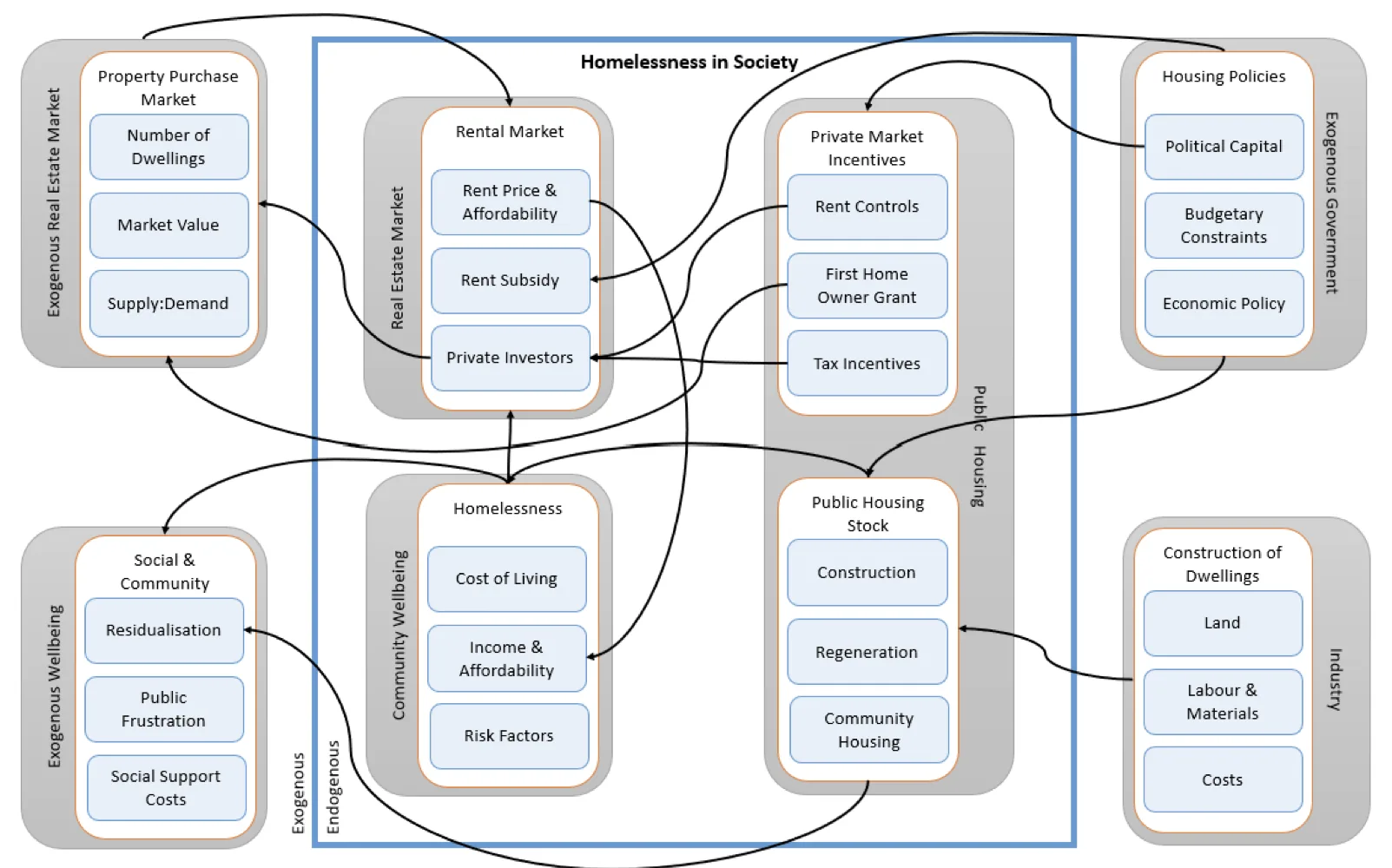
我們先以子系統圖界定房地產市場、租屋市場、私人市場誘因、住房政策與營建產業之間的互動,再以模型邊界表區分內生、外生與排除的變數,最後畫出因果迴路圖。
We first used a subsystem diagram to map how the property market, rental market, private-market incentives, housing policy and the construction industry interact, then a model boundary chart to separate endogenous, exogenous and excluded variables, and finally a causal loop diagram.
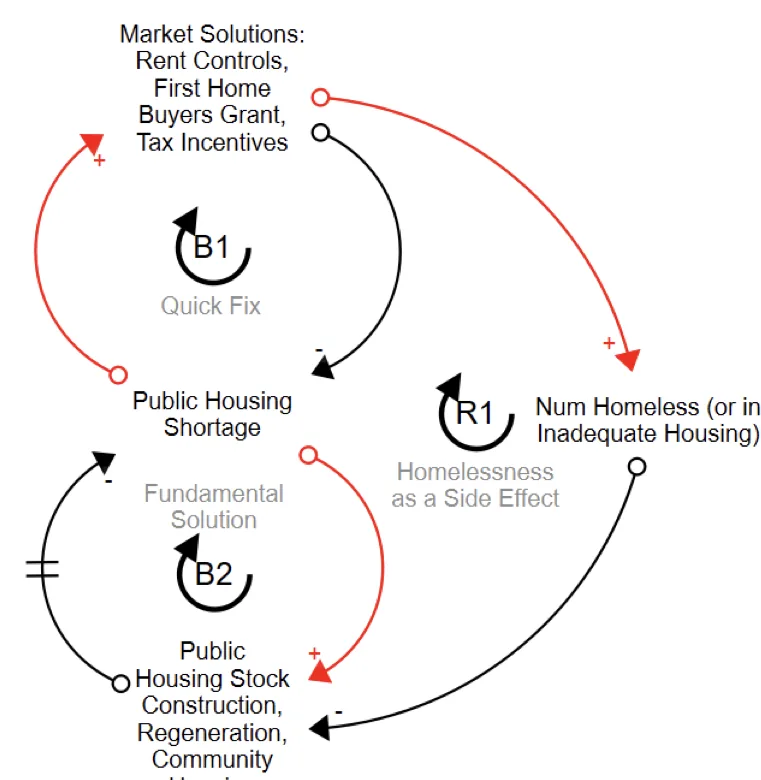
結果顯示,這個系統符合「轉嫁負擔」(Shifting the Burden)的系統基模。政府的市場解方:租金管制、首購補助與稅務誘因,是見效快的「速效藥」,把替代住所外包給私人市場,暫時降低社會住宅需求(平衡迴路 B1)。興建社會住宅才是「根本解」(平衡迴路 B2),但需要更多資源與時間,這段延遲讓速效藥更有吸引力。資源因此被轉去補貼私人市場,社會住宅存量持續下降,無家者越來越多,又需要更多速效藥,形成惡性循環(增強迴路 R1)。
The result showed the system follows the “Shifting the Burden” archetype.The government’s market solutions — rent controls, the First Home Buyers Grant and tax incentives — are a quick fix that outsources substitute housing to the private market and temporarily lowers demand for social housing (balancing loop B1).Building social housing is the fundamental solution (balancing loop B2), but it takes more resources and time, and that delay makes the quick fix more attractive.Resources get diverted to subsidising the private market, social housing stock keeps shrinking, homelessness grows, and more quick fixes are needed — a vicious cycle (reinforcing loop R1).
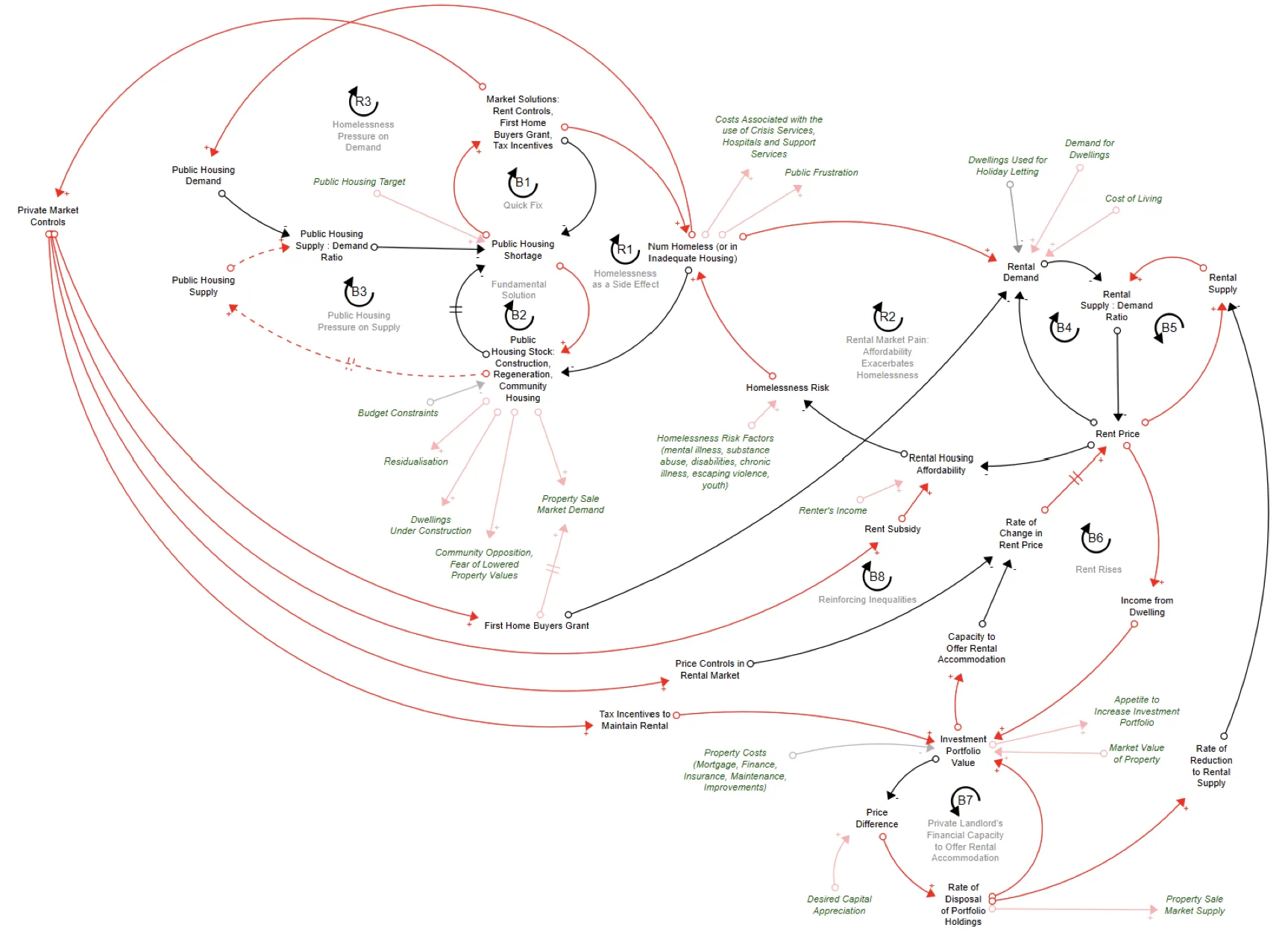
市場解方還會透過租金推升無家者人數(增強迴路 R2):租金上漲,租屋負擔能力下降,無家風險升高;更多人尋找可負擔的住所,又推高租屋需求與租金。租金管制看似能穩定租金,其實只是放慢上漲速度,還可能讓房東因無法負擔成本而賣房,進一步減少租屋供給(平衡迴路 B8)。
Market solutions also drive homelessness up through rents (reinforcing loop R2): as rents rise, affordability falls and homelessness risk grows; more people searching for affordable housing pushes rental demand and rents higher still.Rent controls seem to stabilise rents but only slow the increase — and can push landlords who can no longer cover costs to sell, shrinking rental supply further (balancing loop B8).
政策建議Policy recommendations
面對轉嫁負擔的基模,管理原則是聚焦根本解,速效藥只用來爭取時間。要在 2036 年前滿足 73,000 戶社會住宅的需求,政策必須回到興建社會住宅。由於規模龐大,可以借助私人部門:根據 Coates 等人(2020)的研究,政府與營建業合作、增加專款並加速審核,兩年內可新建 19,500 戶社會住宅並翻修 80,000 戶既有住宅。從交易型轉為協作型的公私夥伴關係,也能降低成本、提升效率並創造規模經濟。
For a Shifting the Burden archetype, the management principle is to focus on the fundamental solution and use quick fixes only to buy time.To meet the need for 73,000 social housing dwellings by 2036, policy must return to building social housing. Given the scale, the private sector can help: Coates et al.(2020) found that government–construction partnerships with dedicated funding and faster approvals could deliver 19,500 new social homes and upgrade 80,000 existing ones within two years.Moving from transactional to collaborative public–private partnerships can also cut costs, improve efficiency and create economies of scale.
課程團隊Course team
課程|System Dynamics
Course | System Dynamics
教授|Dr Russell Richards
Lecturer | Dr Russell Richards
團隊|Yu-Hsuan Liu, Tracy Fortt, Ka Hei Kwok, Sonia Lara, Ko-Chen Lin
Team | Yu-Hsuan Liu, Tracy Fortt, Ka Hei Kwok, Sonia Lara, Ko-Chen Lin