異人茶金|淡水港的美好年代Foreign Merchants, Tea and Gold: Tamsui Port’s Golden Age
策劃概念Concept
說到淡水,多數人想到的是老街、夕陽與河岸。很多人聽到淡水產茶都覺得不可思議,但早年淡水確實種茶,至今也還有製茶廠;淡水港更曾因茶而輝煌:1865 年英國商人陶德從福建安溪引進茶苗,1869 年 Formosa Oolong 外銷美國一炮而紅,淡水港成為台灣茶走向世界的起點。這段歷史就藏在洋行、海關碼頭與滬尾偕醫館裡,卻很少被說出來,所以我們想用五感來轉譯這段文化。
Mention Tamsui and most people think of the old street, sunsets and the riverside. Many are amazed to hear that Tamsui grows tea — yet it did in the early days, and a tea factory still operates today.Tamsui port even flourished because of tea: in 1865 British merchant John Dodd brought tea seedlings from Anxi in Fujian, and by 1869 Formosa Oolong was a hit in America, making Tamsui the starting point of Taiwanese tea’s journey to the world.That history lives on in the merchant houses, the customs wharf and Hobe Mackay Hospital — but it was rarely told, so we set out to translate it through the five senses.
這個系列是受旅學堂邀請、共同策劃的。我們的切入點是漫畫家張季雅的《異人茶跡》:漫畫是年輕人最容易進入歷史的媒介,也已經有一群熱愛茶與故事的讀者。以這部漫畫為入口,我把淡水的茶葉史轉譯成「茶學 × 茶跡 × 茶食」的五感體驗,讓不同世代都能找到自己走進來的那扇門。我負責整體策劃,包括以服務設計規劃活動流程,以及文案企劃。
Tamsui Traveler invited us to co-plan the series. Our way in was cartoonist Chang Chi-Ya’s manga Foreign Merchants and Tea: manga is the easiest way for young people to enter history, and it already had readers who love tea and stories.With the manga as the door, I translated Tamsui’s tea history into sensory experiences — tea learning, tea trails and tea tasting — so each generation could find its own way in.I led the overall planning, including designing the event flow through service design and writing the copy.
三部曲:為不同的人,設計不同的入口Three chapters: a different door for each audience
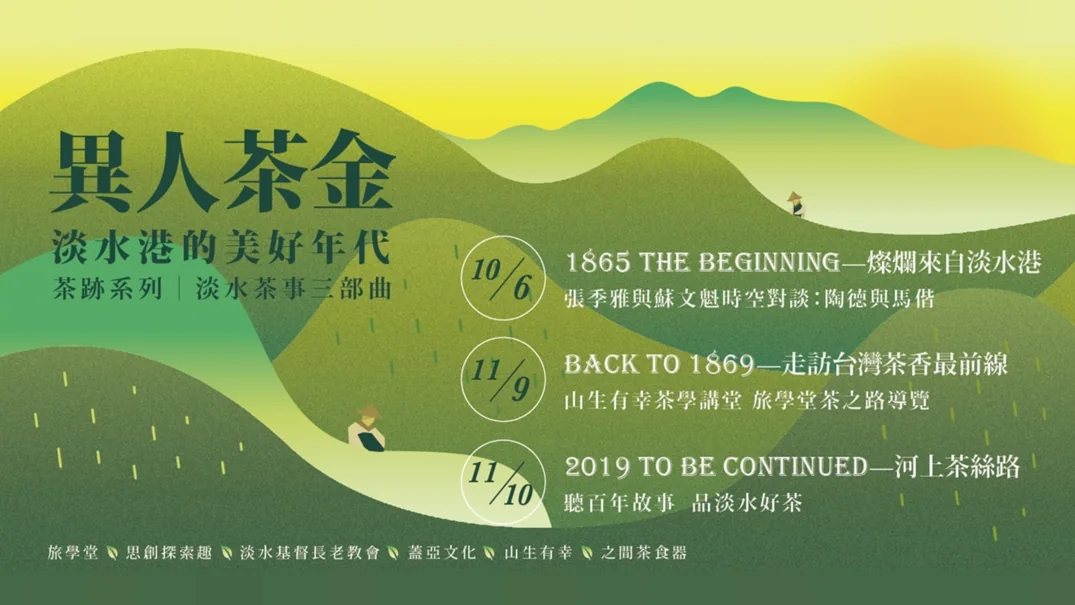
一場活動很難同時滿足所有人,所以我們把系列拆成「淡水茶事三部曲」,每一部對應一種參與者與一種體驗深度:第一部用漫畫吸引年輕讀者與書迷,第二部用茶學與實地踏查服務想深入了解茶的人,第三部再延伸到茶食與生活美學(由旅學堂與合作夥伴規劃)。我負責策劃的是前兩部。三部曲可以單獨參加,也鼓勵一起報名,讓參加者從「聽故事」一路走到「親身體驗」。
One event can’t serve everyone, so we split the series into “Three Chapters of Tamsui Tea,” each matched to a kind of participant and a depth of experience: the first used manga to draw young readers and fans, the second used tea learning and field walks for people who wanted to go deeper, and the third — planned by Tamsui Traveler and partners — extended into tea, food and everyday aesthetics.I planned the first two. Each chapter worked on its own, but we encouraged signing up for all three, so participants could move from hearing the story to living it.
在籌備會議中,「名稱很重要」被提了不只五次。每一場的名字都要像故事的章節:〈1865 THE BEGINNING:燦爛來自淡水港〉講茶進來的那一年,〈BACK TO 1869:走訪台灣茶香最前線〉則帶人回到茶出口的現場。宣傳上,我們也依合作夥伴的經驗調整節奏:提前三週以上開跑、每週發一到兩篇短文,報名集中在 Accupass,因為每多點一頁,就可能流失七成的人。
In our planning meetings, “the name matters” came up more than five times.Each title had to read like a chapter: “1865 THE BEGINNING: Glory from Tamsui Port” marked the year tea arrived, and “BACK TO 1869: On the Front Line of Taiwanese Tea” took people back to where it was exported.We also tuned the promotion to our partners’ experience: start at least three weeks ahead, post one or two short pieces a week, and keep registration on Accupass — because every extra click can lose seven in ten people.
把一場對談,設計成一段旅程Turning a talk into a journey
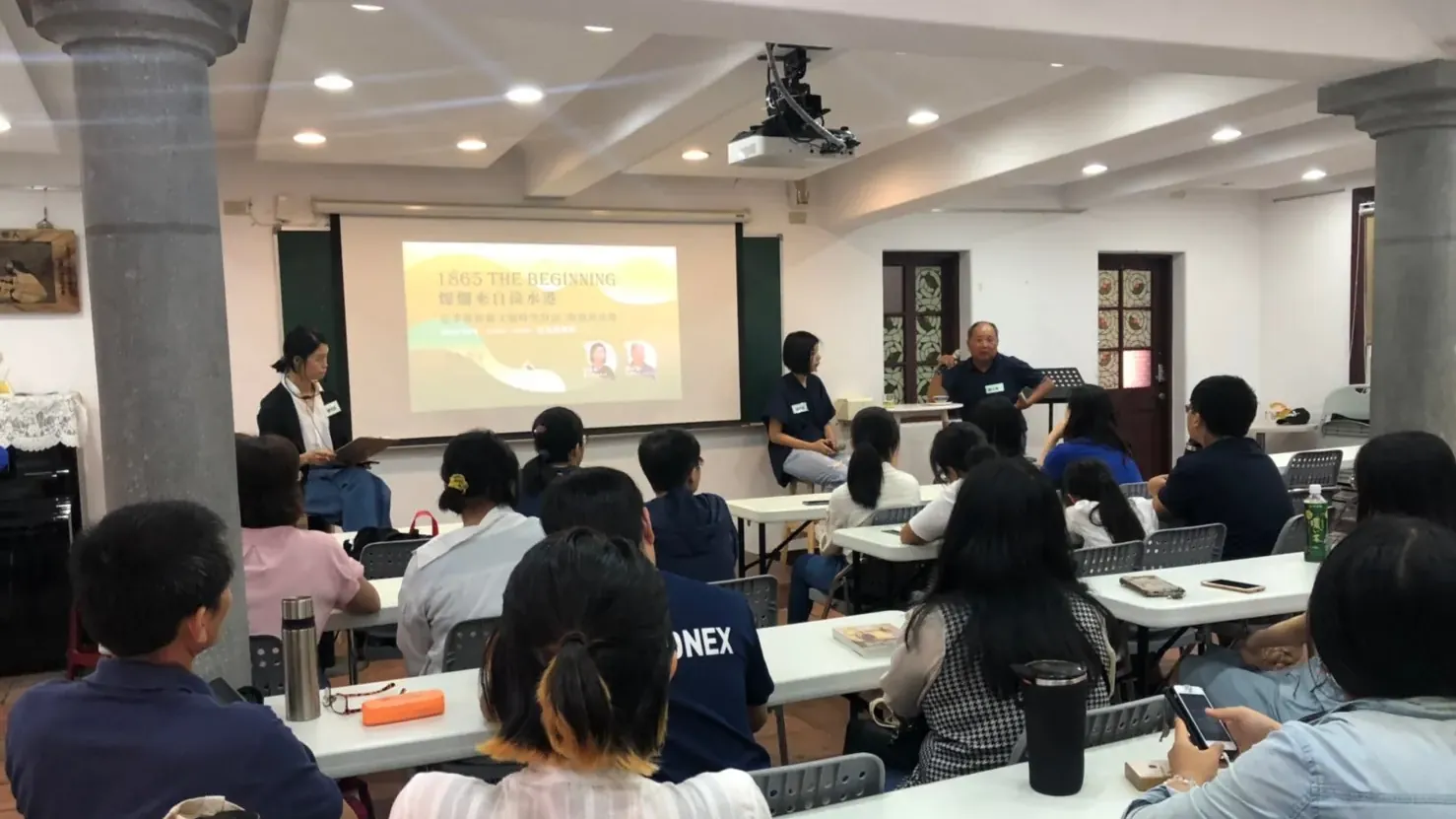
第一部邀請《異人茶跡》作者張季雅與淡水禮拜堂長老蘇文魁,跨時空對談陶德與馬偕:一位從漫畫創作、一位從在地文史,兩種角度互相補充。報名人數超出原本場地,我們把活動改到淡水禮拜堂,順勢讓參加者走過禮拜堂、滬尾偕醫館與旅學堂三個場域,讓古蹟本身成為舞台。
The first chapter brought together Chang Chi-Ya, author of Foreign Merchants and Tea, and Su Wen-Kui, an elder of Tamsui Presbyterian Church, for a dialogue across time about Dodd and George Mackay — one from the perspective of creating a manga, the other from local history, each filling in the other.When registrations outgrew the original venue, we moved to the church and let participants walk through three sites — the church, Hobe Mackay Hospital and Tamsui Traveler — so the historic buildings themselves became the stage.
我用服務設計的思維規劃參加者的每個接觸點:行前通知附上漫畫加購連結;報到時領一杯冷泡茶、看輪播簡報進入情境;對談以 Sli.do 匿名提問,降低發問門檻;結束後到偕醫館參加簽書會與微型展;最後打卡、填寫問卷,就能換到張季雅繪製的限定明信片。這個設計讓我們一次蒐集到回饋,也讓活動在社群上被看見。
I used service design to plan every touchpoint: the pre-event notice included a link to pre-order the manga; at check-in, participants got a cold-brew tea and watched a slideshow that set the scene; questions came in anonymously through Sli.do to make asking easier; afterwards came a book signing and pop-up exhibition at the hospital; and checking in on social media and filling in the survey earned a limited-edition postcard drawn by Chang Chi-Ya.The design gathered feedback in one go and got the event seen online.
 1 / 8
一口決勝負的滬尾驗茶官Tamsui tea inspector: decided in one sip
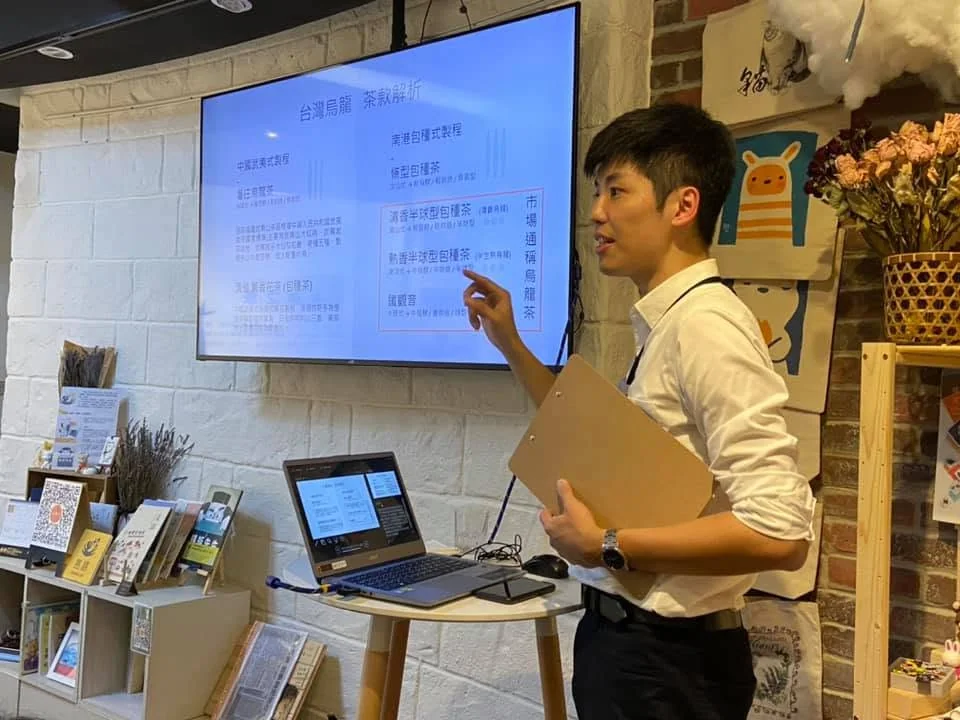
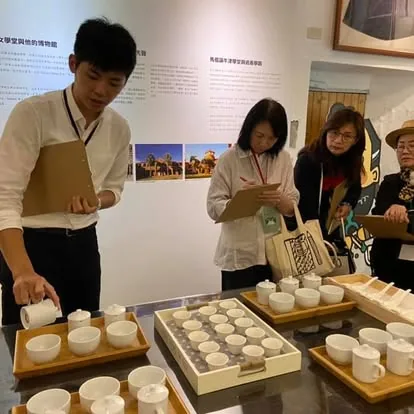
第二部想解決的是:茶的出口歷史很硬,怎麼讓人願意聽、記得住?我把知識包進角色扮演,讓參加者化身「準驗茶官」,經過三關試煉:
The second chapter tackled a problem: the history of tea exports is dry — how do you make people want to listen, and remember? I wrapped the knowledge in role-play: participants became trainee tea inspectors facing three trials:
- 茶學:山生有幸創辦人郭峻堯講解台灣茶史與驗茶流程
- 茶跡:踏查得忌利士洋行與海關碼頭,看見茶葉出口的現場
- 茶試:盲測番庄烏龍、薰香烏龍與包種茶,核對報關單後蓋章認證
- Tea learning: Kuo Chun-Yao, founder of Shan Sheng You Xing, on Taiwan’s tea history and the inspection process
- Tea trails: a walk through Douglas Lapraik & Co. and the customs wharf, where the exports actually happened
- The tea test: blind-tasting Fanzhuang oolong, scented oolong and pouchong, checking them against a customs declaration and stamping it
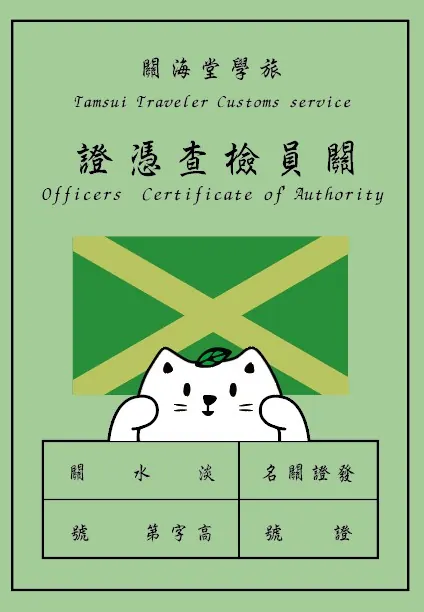
為了讓角色扮演可信,我們參考清代海關的茶釐稅、查驗證與放行文件,復刻了海關官員證與「驗訖」茶章。當參加者親手核對、蓋下印章的那一刻,150 年前的驗茶現場就不再只是課本上的文字。
To make the role-play believable, we drew on Qing-era customs documents — tea duty receipts, inspection certificates and release permits — and recreated a customs officer’s certificate and an “inspected” tea stamp.The moment participants checked the tea and pressed the stamp themselves, the tea inspection of 150 years ago stopped being words in a textbook.

2020|從「聽」茶,到「做」茶2020 | From hearing about tea to making it
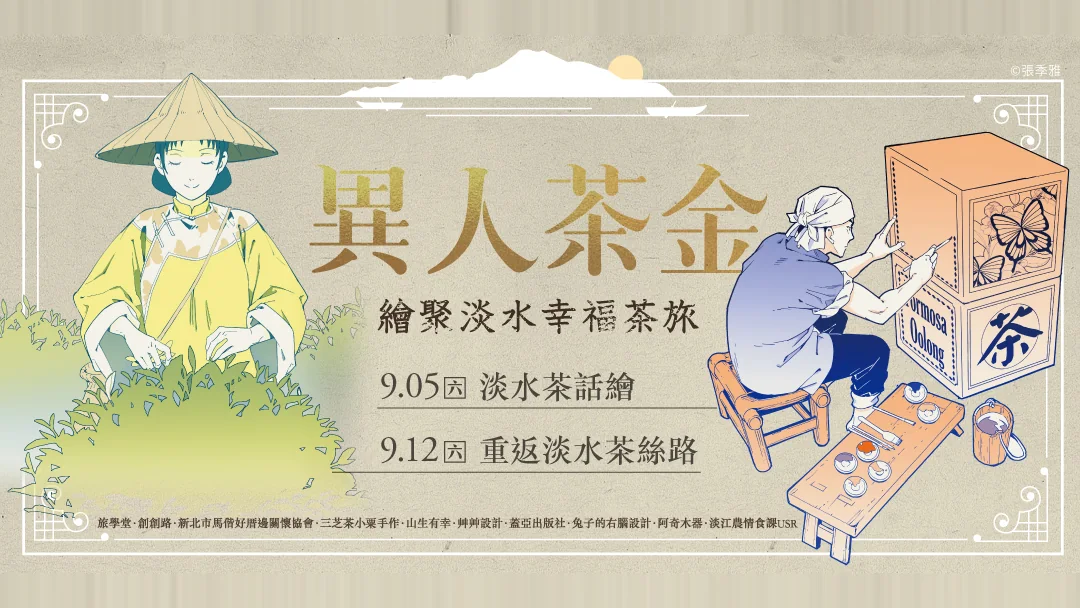
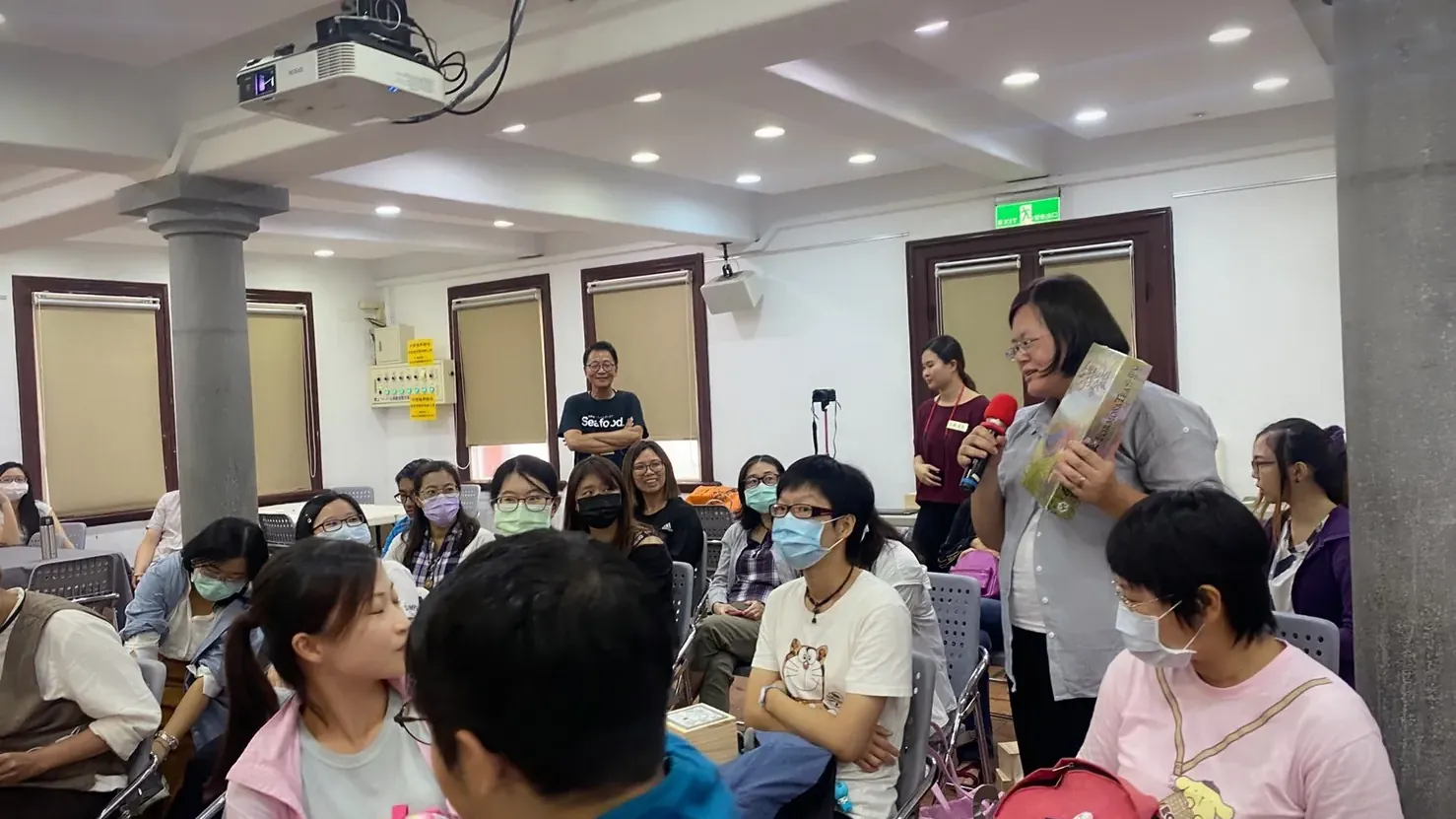
隔年系列延續為「繪聚淡水幸福茶旅」。我從第一年的經驗發現,參加者最投入的是能動手、能帶走的時刻,所以第二年的主軸從「聽」茶史轉向「做」茶。9 月 5 日〈淡水茶話繪〉把漫畫、製茶與桌遊放在同一個舞台:張季雅、山生有幸郭峻堯與《臺灣製茶錄》桌遊發行人蔡惠強,三人都以茶為題,卻做出完全不同的作品。對談中,我們配合講者的話題依序上茶:講到漫畫時品番庄烏龍,講到大稻埕的燻花茶時換上梔子花茶,讓味覺跟著故事走。參加者還能親手彩繪復刻的老茶箱,最後以繪簽會與新桌遊試玩收尾。
The next year the series continued as “A Happy Tea Journey Drawn Together in Tamsui.” The first year showed me that participants were most engaged in moments they could do and take home, so the second year shifted from hearing about tea history to making tea.On 5 September, “Tamsui Tea, Talk and Drawing” put manga, tea making and board games on one stage: Chang Chi-Ya, Kuo Chun-Yao of Shan Sheng You Xing and Tsai Hui-Chiang, publisher of the board game Formosa Tea — all three working with tea, each creating something completely different.We served teas in step with the conversation — Fanzhuang oolong while the manga was discussed, gardenia tea when the talk turned to Dadaocheng’s scented teas — so taste followed the story.Participants also painted replica antique tea boxes, and the day ended with a drawing-and-signing session and a new board game playtest.
 1 / 5
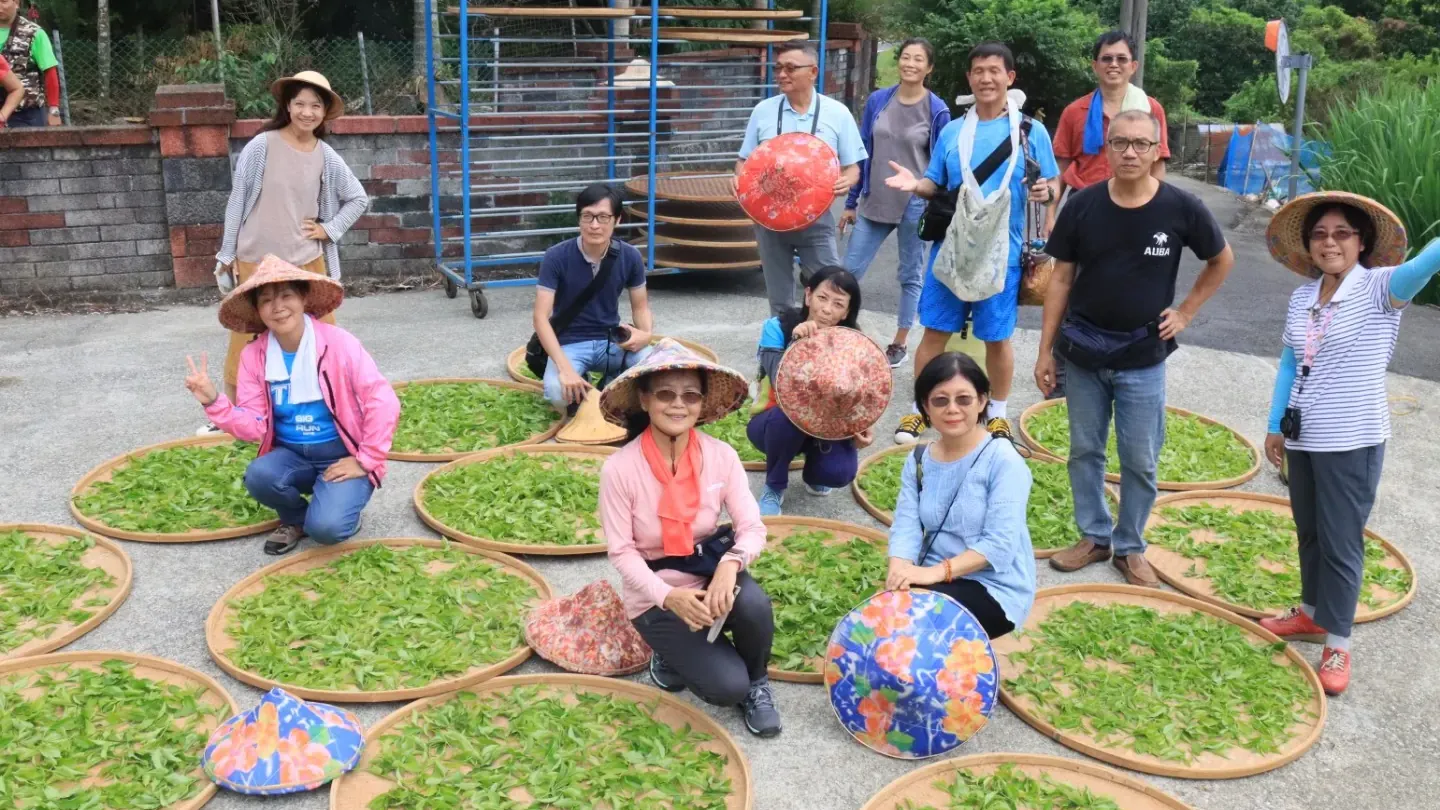
9 月 12 日〈重返淡水茶絲路〉則把人帶回茶的源頭。在三芝茶園-小粟手作,參加者戴上斗笠、背起茶簍,從採茶、炒青、揉捻到烘焙,親手做出紅玉紅茶帶回家。下午由返鄉茶農粟益民與淡水文史工作者吳峻毅對談,從「返鄉」與「留鄉」青年的角度聊淡水百年茶事,讓茶的故事從過去延伸到現在。
On 12 September, “Back to Tamsui’s Tea Road” took people back to where tea begins.At the Sanzhi Tea Garden (Xiao Su Handmade), participants put on bamboo hats and tea baskets, then picked, pan-fired, rolled and roasted their own Ruby black tea to take home.In the afternoon, returning tea farmer Su Yi-Min and Tamsui historian Wu Chun-Yi talked about a century of Tamsui tea from the perspective of young people who came home and those who stayed — carrying the story of tea from the past into the present.
 1 / 5
等了一年的茶箱The tea box, a year in the making
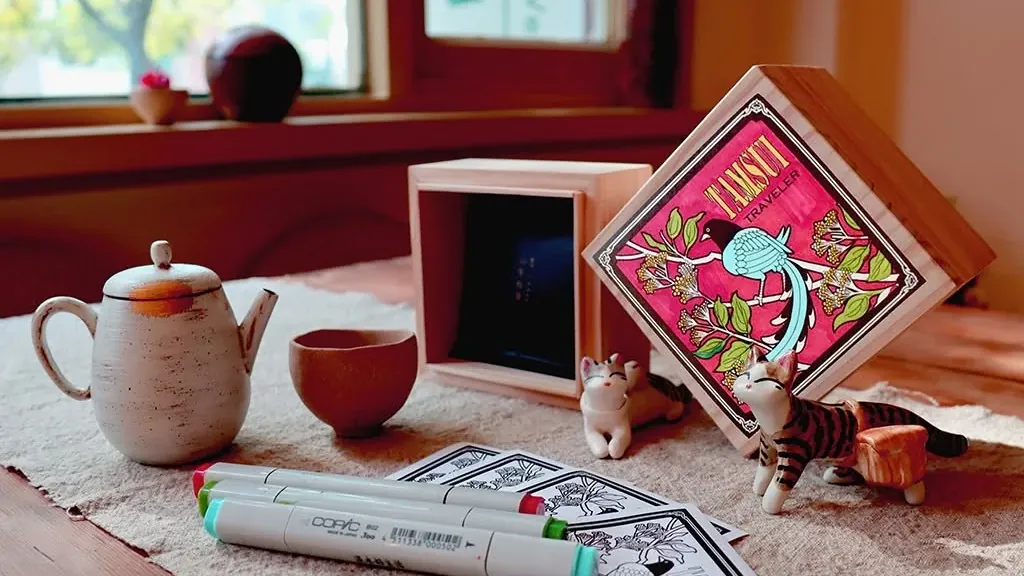
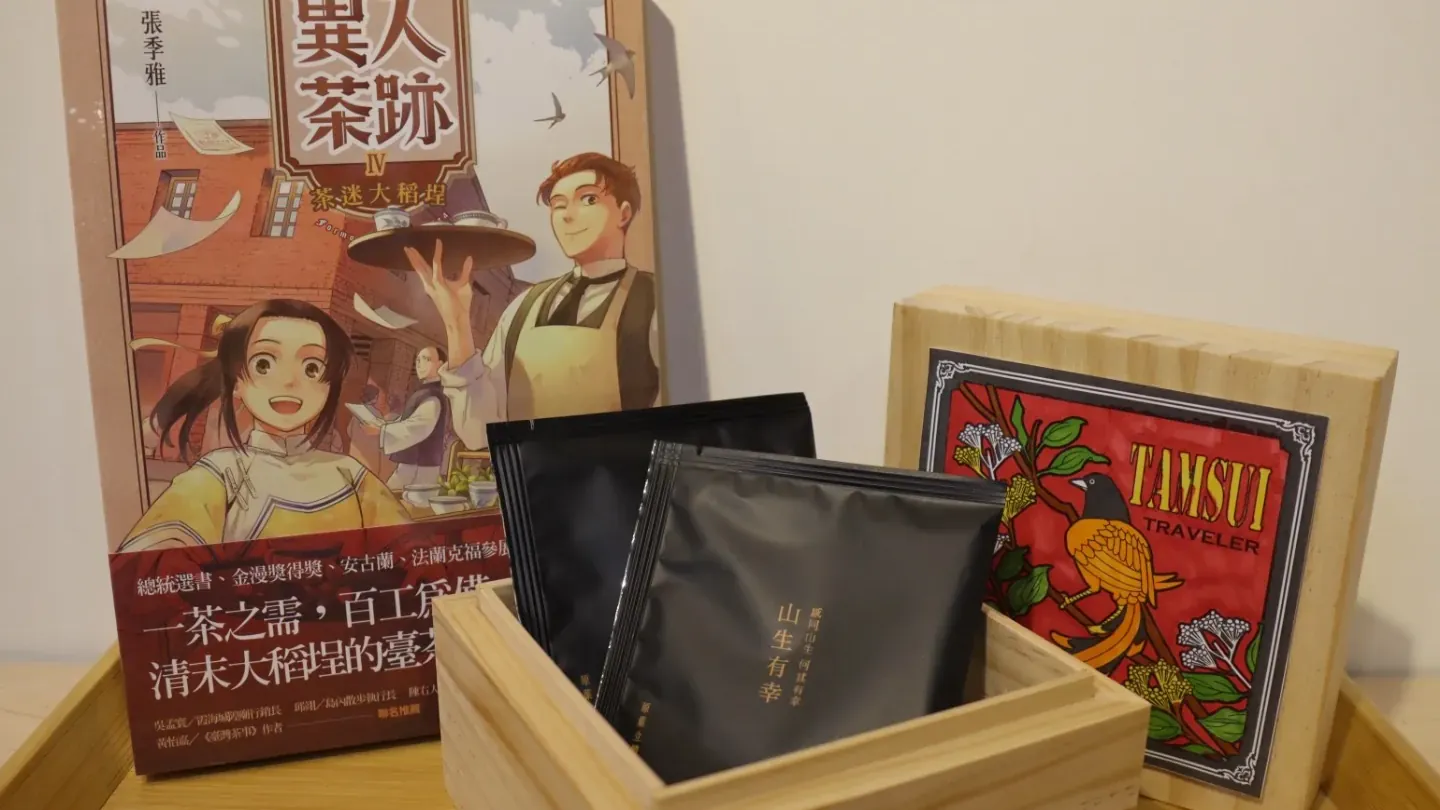
茶箱是淡水出口茶最重要的符碼:當年的烏龍茶就裝在木箱裡,從淡水港運往世界。2019 年我們就想做一款茶箱,但礙於成本與物料,最後沒能實現。2020 年,我們認識了阿奇木器,由他為活動打造限定茶箱,再結合張季雅的漫畫插畫,推出讓參加者帶回家的茶禮盒,把淡水出口茶的記憶,變成一份可以收藏的禮物。
The tea box is the defining symbol of Tamsui’s tea exports: oolong once left Tamsui port for the world packed in wooden chests. We wanted to make a tea box back in 2019, but cost and materials got in the way.In 2020 we met Archi Woodcraft, who built a limited-edition box for the event; paired with Chang Chi-Ya’s manga illustration, it became a tea gift box participants could take home — turning the memory of Tamsui’s tea exports into a keepsake.
 1 / 4
具體效益Results
- 我策劃 2019–2020 年共 4 場活動,串聯 7 個合作單位,橫跨漫畫、出版、製茶、桌遊與茶園
- 首場對談的回饋問卷中,活動流程 4.8 分、對談內容 4.7 分(滿分 5 分),所有填答者都希望再收到相關活動資訊
- 依史料復刻海關官員證與「驗訖」茶章,把 150 年前的驗茶流程變成可參與的體驗
- Planned 4 events across 2019–2020, bringing together 7 partners spanning manga, publishing, tea making, board games and a tea garden
- The first dialogue’s feedback survey scored the flow 4.8 and the dialogue 4.7 out of 5, and every respondent wanted to hear about future events
- Recreated a customs officer’s certificate and an “inspected” tea stamp from historical records, turning the tea inspection of 150 years ago into a hands-on experience
行動團隊Team
主辦|旅學堂
Host | Tamsui Traveler
協辦|創創路工作室
Co-organiser | C.C. Loop Studio
合作單位|旅學堂、蓋亞文化、山生有幸、淡水基督長老教會、艸艸設計、阿奇木器、三芝茶園-小粟手作
Partners | Tamsui Traveler, Gaea Books, Shan Sheng You Xing Tea, Tamsui Presbyterian Church, Tsao Tsao Design, Archi Woodcraft, Sanzhi Tea Garden (Xiao Su Handmade)
策劃|劉宇萱、李琪
Planning | Yu-Hsuan Liu, Chi Li
主視覺|2019 陳怡如;2020 兔子的右腦設計(插畫 © 張季雅)
Key visual | 2019 Yi-Ju Chen; 2020 Right Brains of Rabbits Design (illustration © Chang Chi-Ya)