As $ave as Houses|用存錢習慣,讓沙發衝浪青年不再流離As $ave as Houses: Helping Young Couch Surfers Save Their Way to a Home
課程專案簡介Course project overview
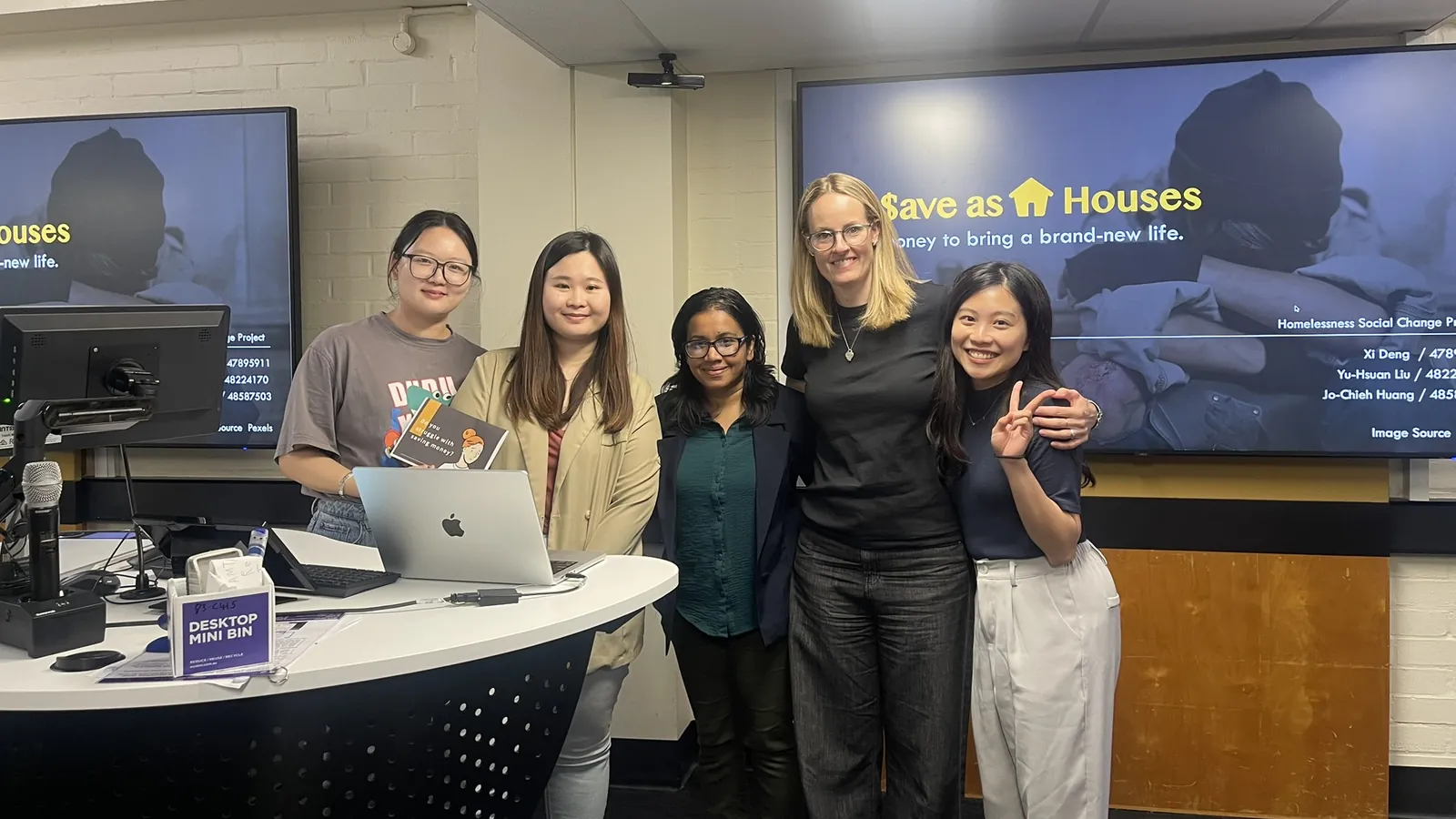
在昆士蘭大學 Marketing for Social Change 課程中,我們選擇「無家可歸」這個棘手問題(wicked problem),聚焦在布里斯本 19–24 歲的沙發衝浪者(couch surfers):他們沒有固定住所,輪流借住朋友家,是最容易被忽略的隱性無家者。透過田野訪談與二手資料,我們發現改變存錢習慣,可以預防他們淪為真正的無家者,因此設計一套線上與線下整合的服務,以諮商、輔導與日誌「輕推」他們改變行為。
In UQ’s Marketing for Social Change course, we took on the wicked problem of homelessness and focused on couch surfers aged 19–24 in Brisbane: young people with no fixed home who move between friends’ couches — the most easily overlooked form of hidden homelessness.Through field interviews and secondary research, we found that changing their saving habits could keep them from becoming roofless, so we designed an integrated online-and-offline service that nudges behaviour change through consultation, coaching and a diary.
專案名稱也藏著用意。英文諺語 as safe as houses 形容「像房子一樣安穩」,我們把 safe 換成 save,寫成 As $ave as Houses:存下錢,才能換來像房子一樣安穩的生活。
The name carries a message too. The English idiom “as safe as houses” means completely secure. We swapped safe for save and wrote it As $ave as Houses: saving money is what buys a life as secure as a home.
設計問題Design problem
布里斯本有 1,277 位無家青年,其中約 59% 是沙發衝浪者。他們常伴隨心理健康、失業、輟學與成癮問題,社會也因此付出高昂代價:澳洲無家青年每年的醫療成本達 3.55 億澳幣,司法成本更高達 53.91 億澳幣。
Brisbane has 1,277 homeless young people, about 59% of them couch surfers.They often struggle with mental health, unemployment, leaving school early and addiction — and society pays a high price: youth homelessness in Australia costs AUD 355 million a year in health care and AUD 5.391 billion in criminal justice.
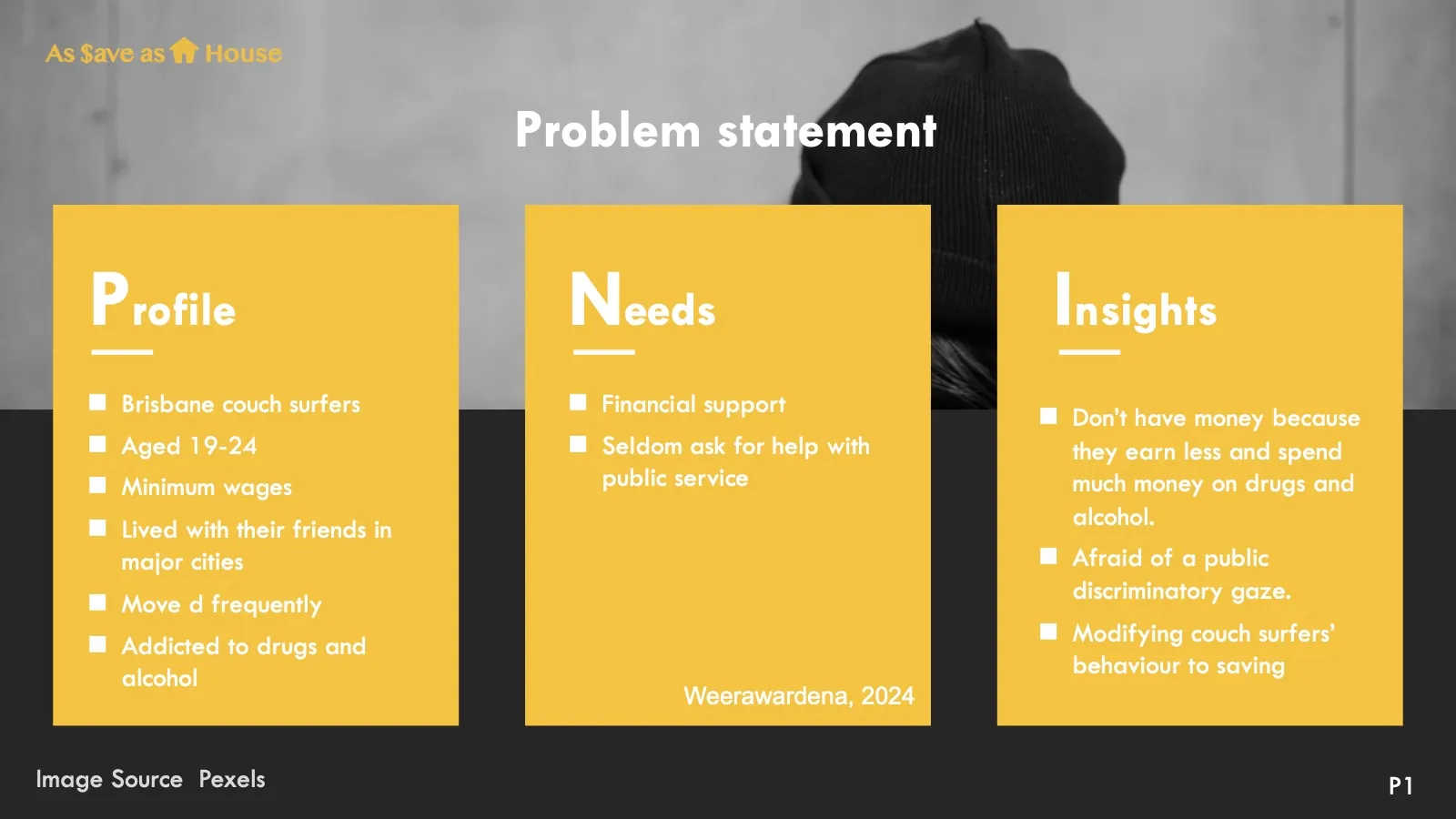
我們從四個面向分析成因:人口面的貧窮(沙發衝浪者就業率只有 9%)、經濟面的住房危機(昆士蘭只有 1% 的租屋是最低工資負擔得起的)、公共服務面的支援不足(約 70% 的人求助後仍回到沙發衝浪),以及文化面的標籤:他們不認為自己是無家者,也害怕被歧視而不願求助。
We analysed the causes from four angles: poverty (only 9% of couch surfers are employed), the housing crisis (just 1% of Queensland rentals are affordable on a minimum wage), gaps in public services (about 70% end up couch surfing again after seeking help), and cultural labels — they don’t see themselves as homeless, and fear of stigma keeps them from asking for help.
目標市場與人物誌Target market and persona
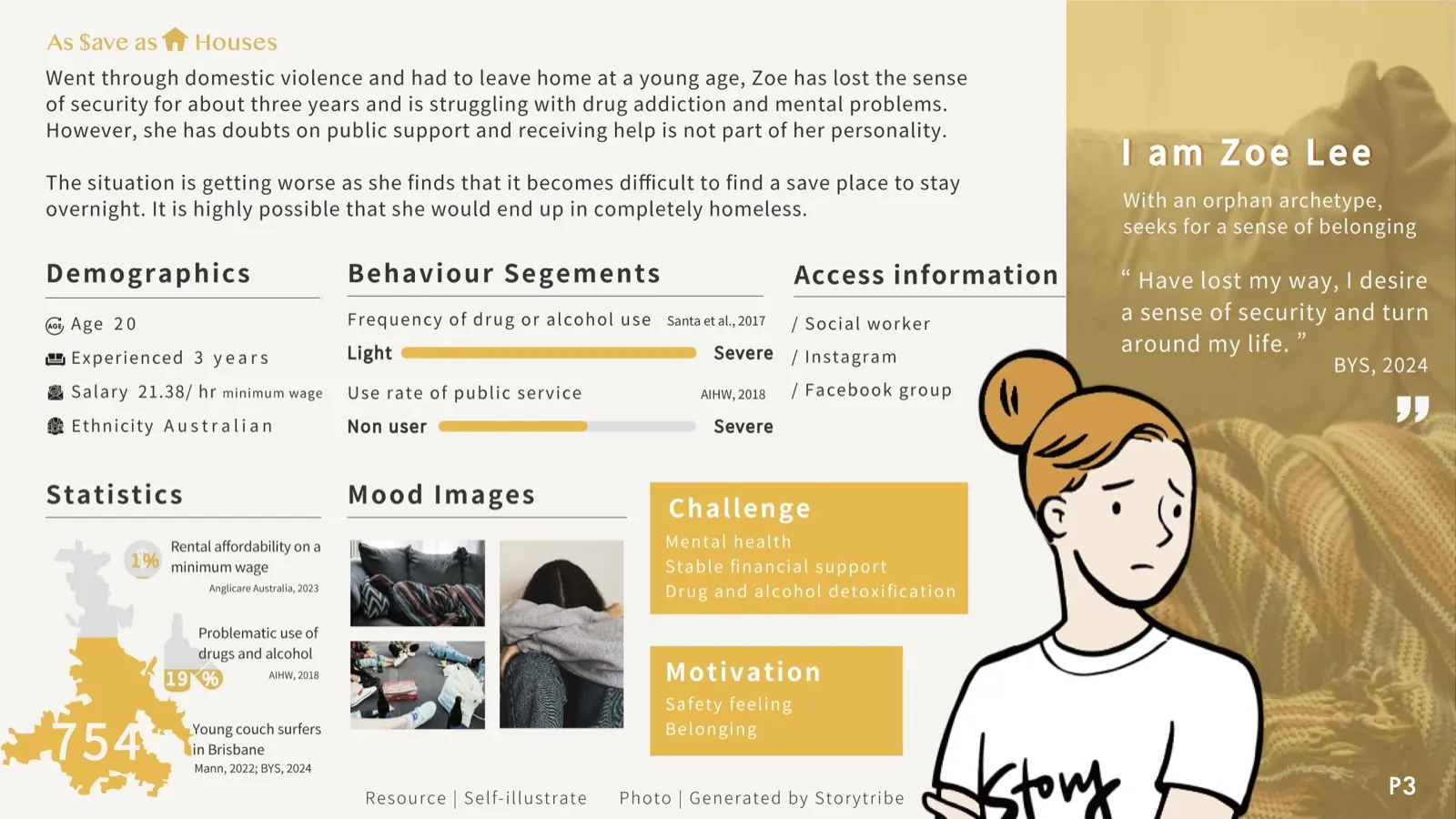
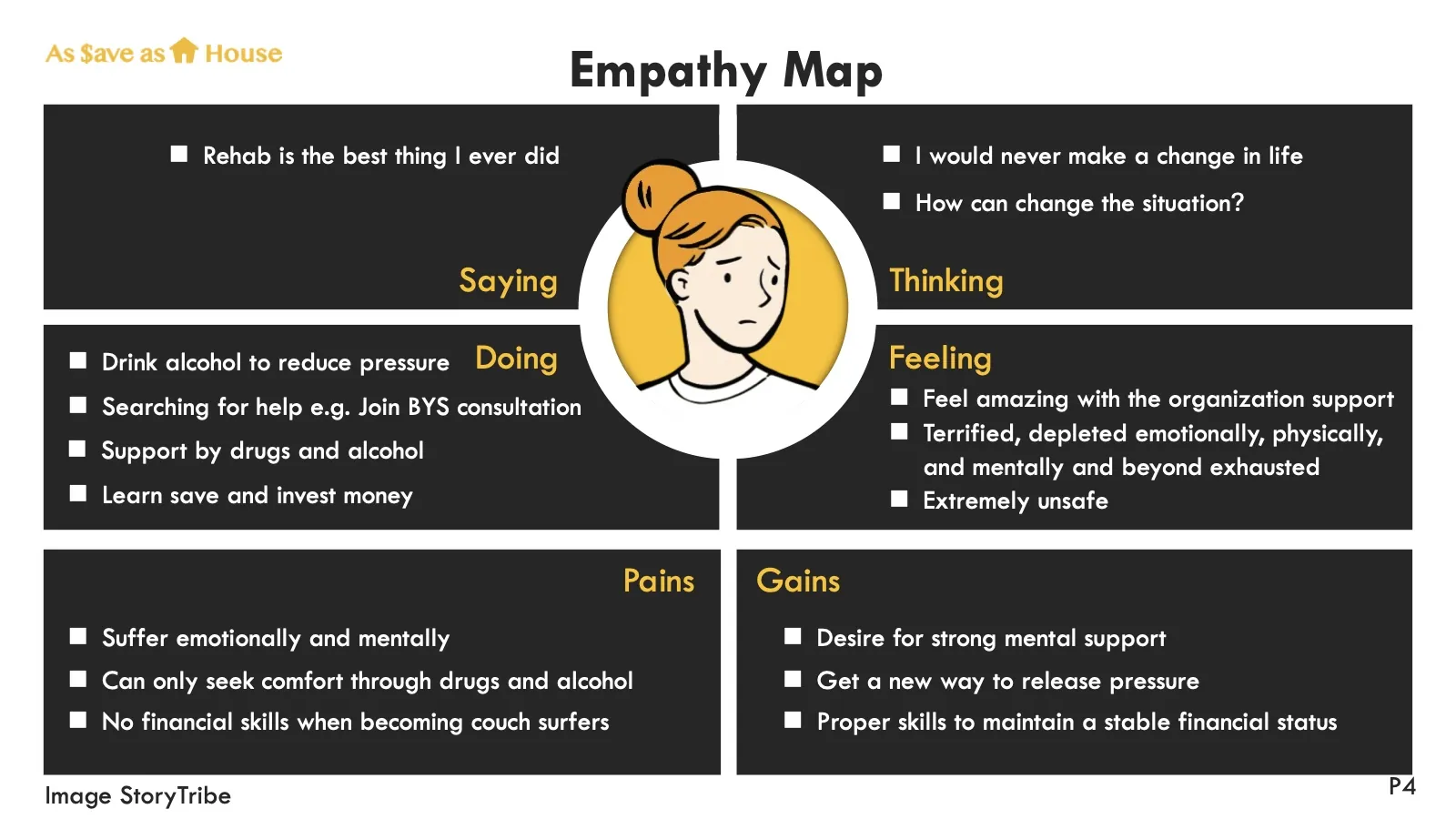
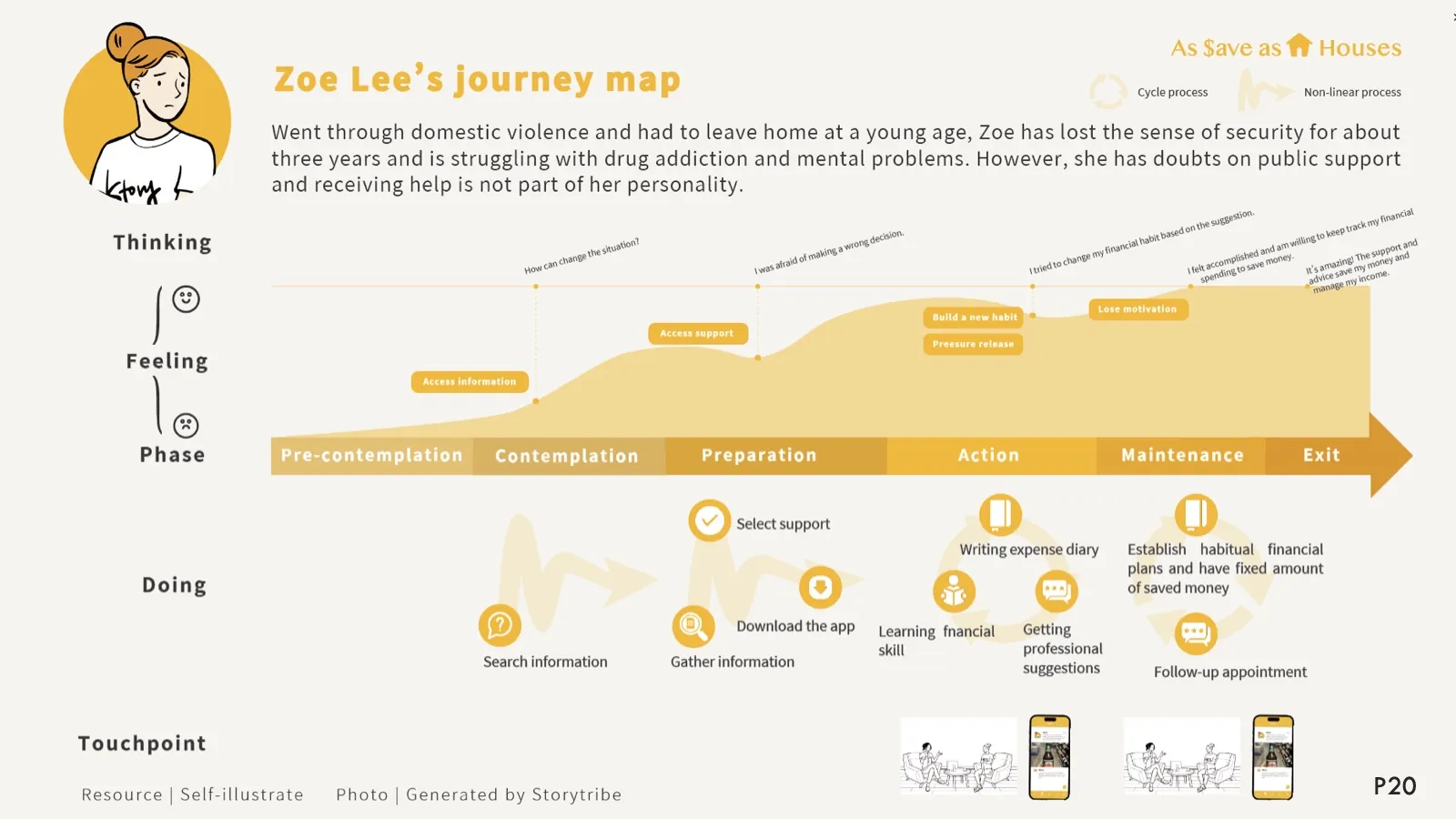
我們依收入、藥物與酒精使用程度、公共服務使用頻率與居住地區進行市場區隔,鎖定住在大城市、領最低工資(時薪 21.38 澳幣)、有嚴重藥酒問題、反覆使用公共服務的沙發衝浪者,推估布里斯本約有 754 人。我們訪談了曾經無家可歸的 Zoe Lee,並以人物誌與同理心地圖整理她的處境:她想改變,卻只能從藥物和酒精中尋求慰藉,也缺乏理財能力。
We segmented by income, drug and alcohol use, frequency of public-service use and location, and targeted couch surfers who live in a major city, earn the minimum wage (AUD 21.38 an hour), have severe drug and alcohol problems and repeatedly use public services — an estimated 754 people in Brisbane.We interviewed Zoe Lee, who had experienced homelessness, and captured her situation in a persona and an empathy map: she wants to change, but finds comfort only in drugs and alcohol and has no financial skills.
目標與社會交換Aim and social exchange
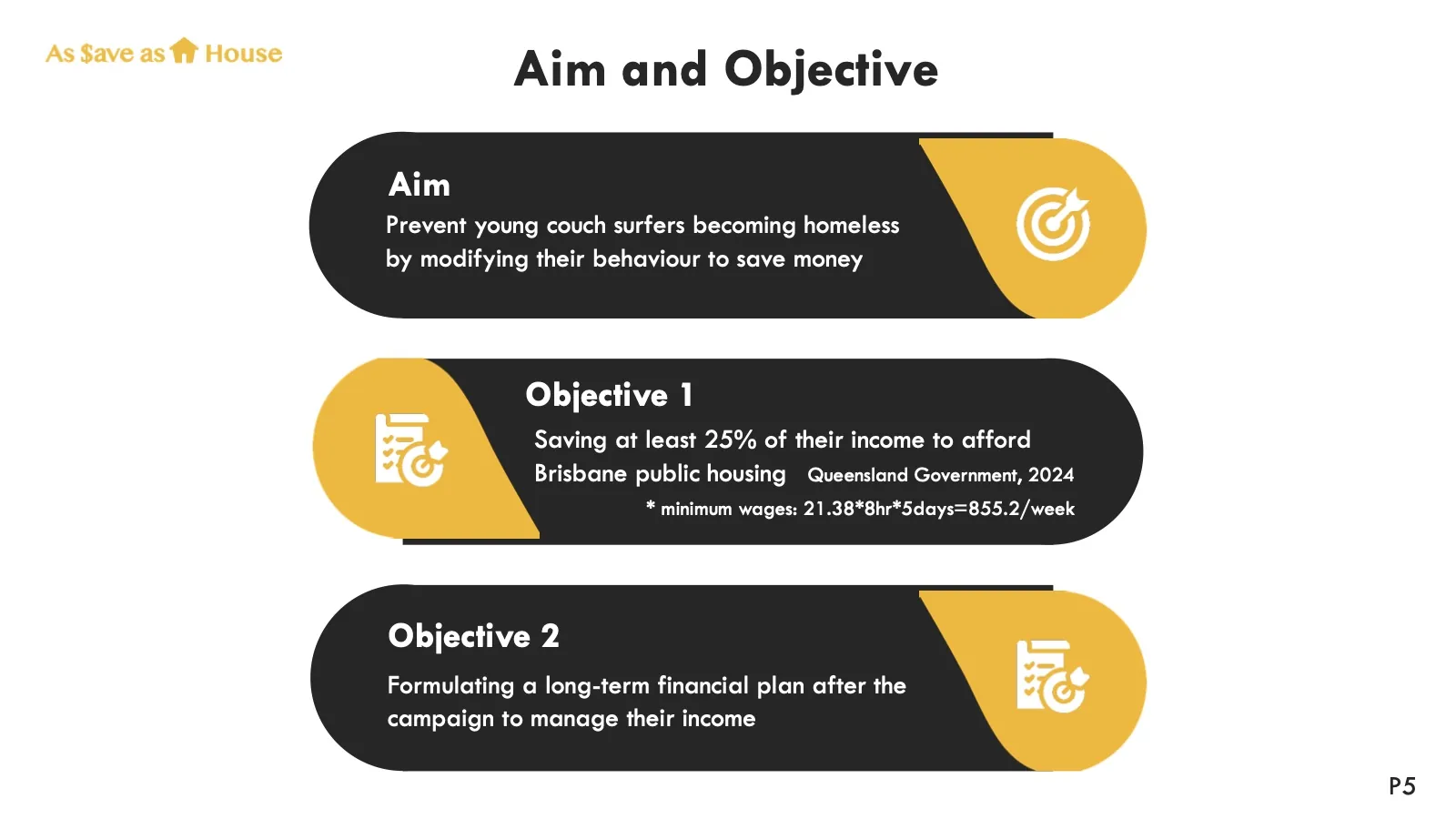
我們的目標是改變沙發衝浪青年的存錢行為,預防他們淪為無家者。依照 SMART 原則訂出兩個具體目標:一個月內存下至少 25% 的收入,足以負擔布里斯本公共住宅;並在活動結束後,建立一份長期的個人財務計畫。
Our aim was to prevent young couch surfers from becoming homeless by changing their saving behaviour.Following SMART principles, we set two objectives: save at least 25% of their income within one month — enough to afford Brisbane public housing — and build a long-term personal financial plan after the campaign.
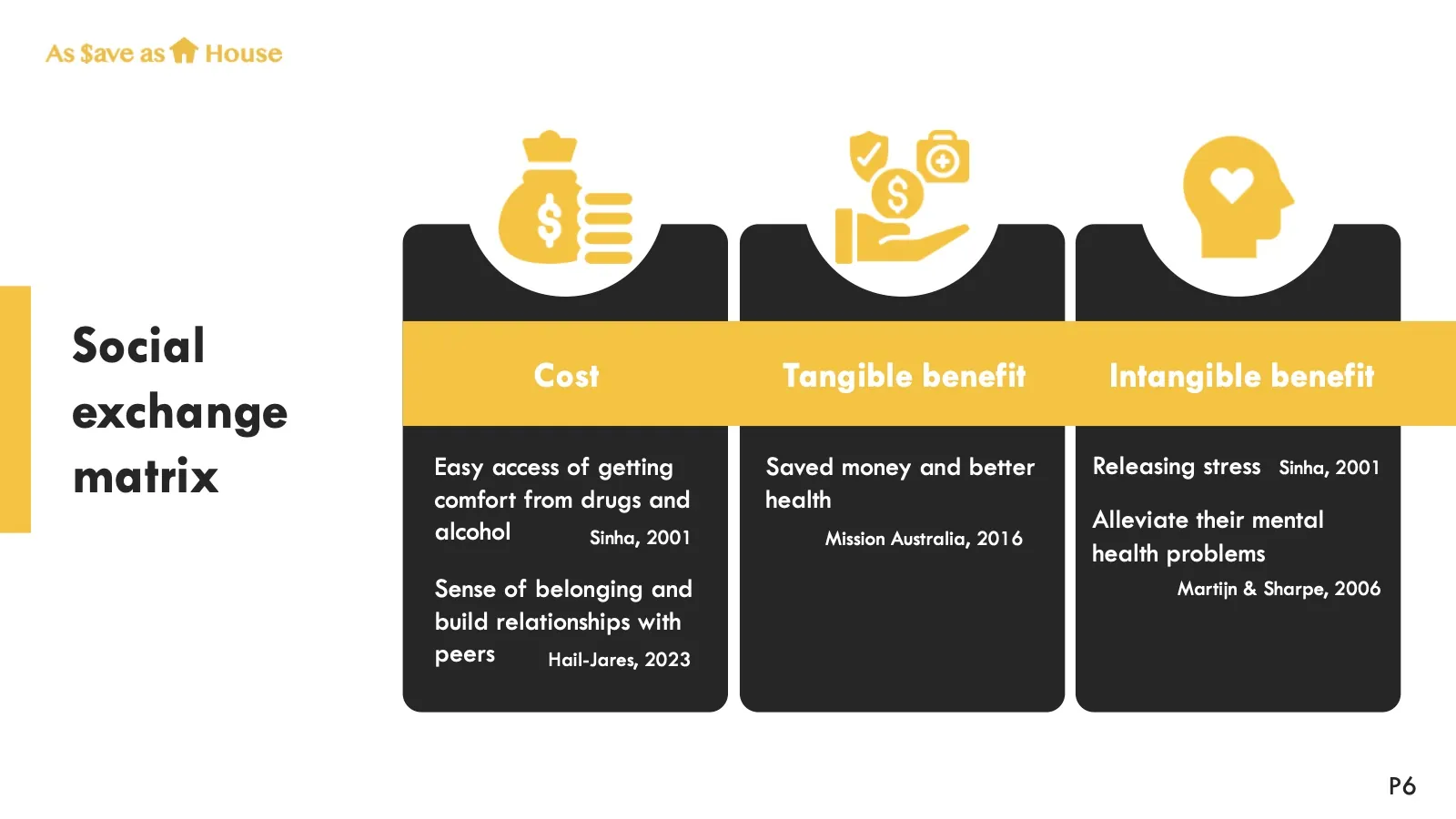
改變需要付出代價:失去藥酒帶來的慰藉,也可能失去同儕間的歸屬感。換來的是存下的錢、更好的健康、更少的壓力,以及心理狀態的改善。
Change comes at a cost: giving up the comfort of drugs and alcohol, and perhaps the sense of belonging among peers. In return come savings, better health, less stress and improved mental wellbeing.
介入策略:輕推Intervention strategy: Nudge
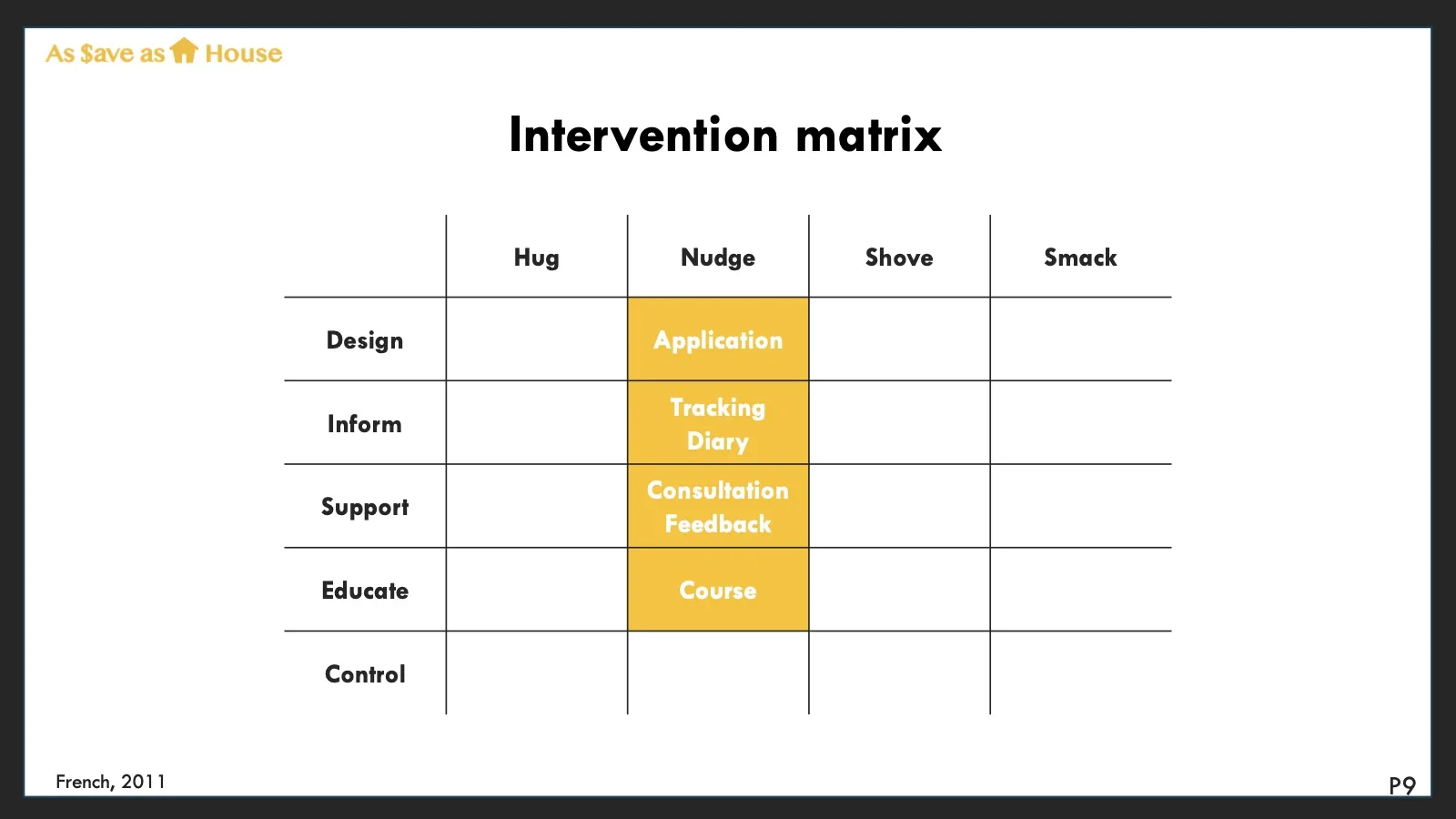
依據行為改變階段模型,Zoe 處於「準備期」:她已意識到要改變。我們以 French(2011)的介入矩陣選擇「輕推」(Nudge)策略,結合設計、告知、支持與教育四個面向,讓存錢變得簡單、自然:
Using the Stages of Change model, we placed Zoe in the preparation stage: she already knows she needs to change.Using French’s (2011) intervention matrix, we chose a Nudge strategy across four domains — design, inform, support and educate — to make saving easy and natural:
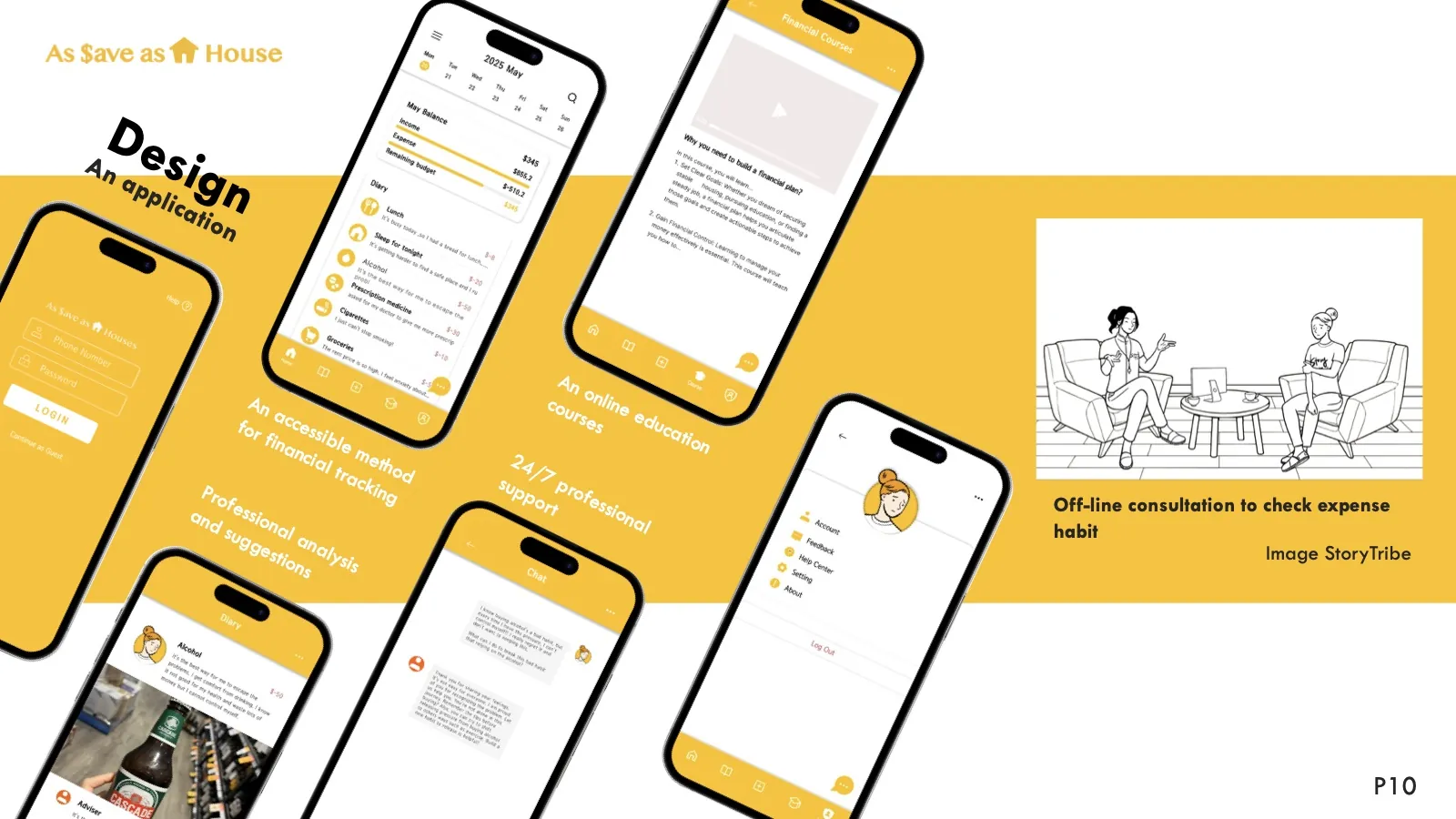
- 設計:一個 App,整合記帳、日誌、諮商與課程
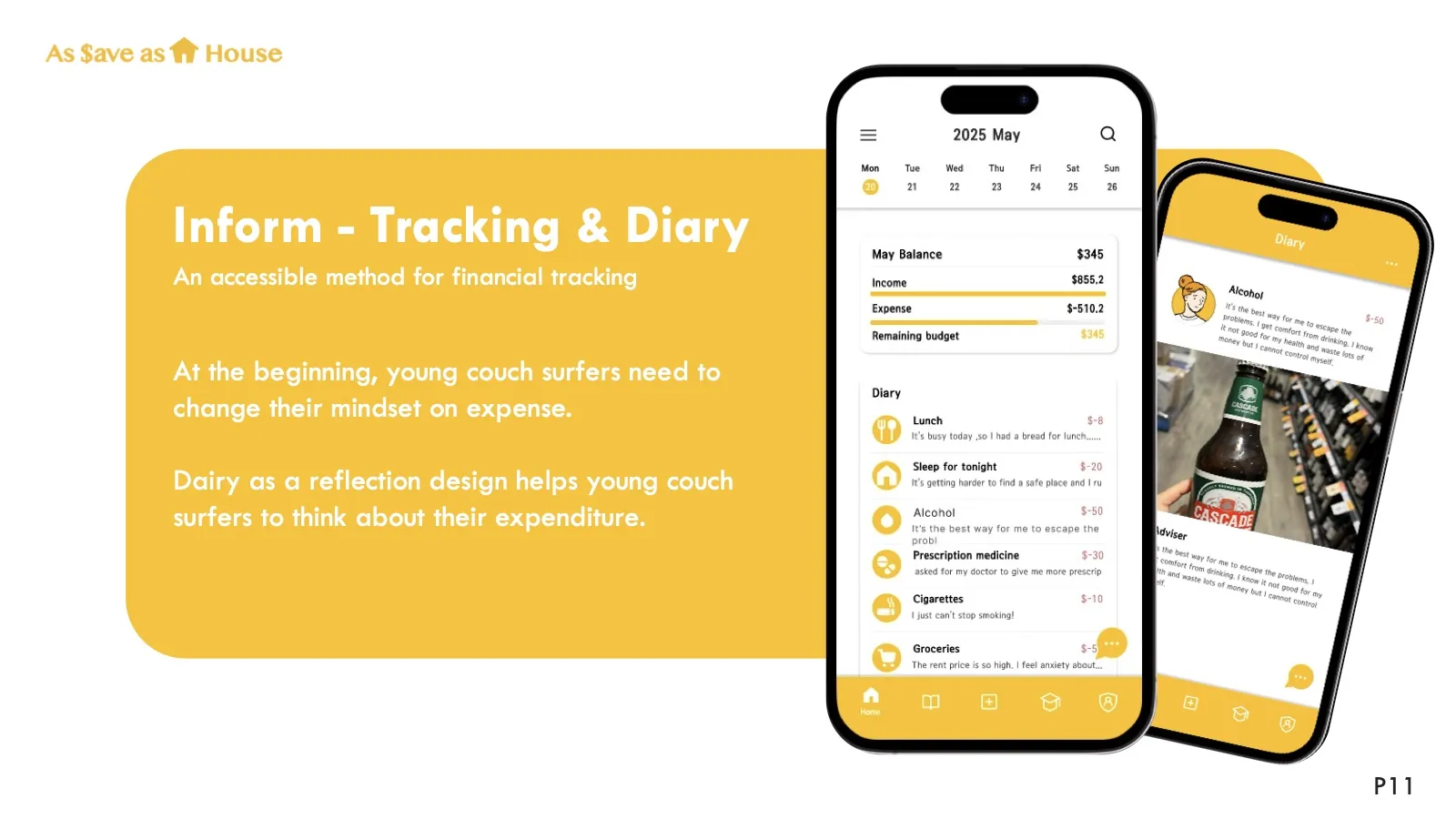
- 告知:記帳追蹤與反思日誌,幫助他們重新看見自己的花費
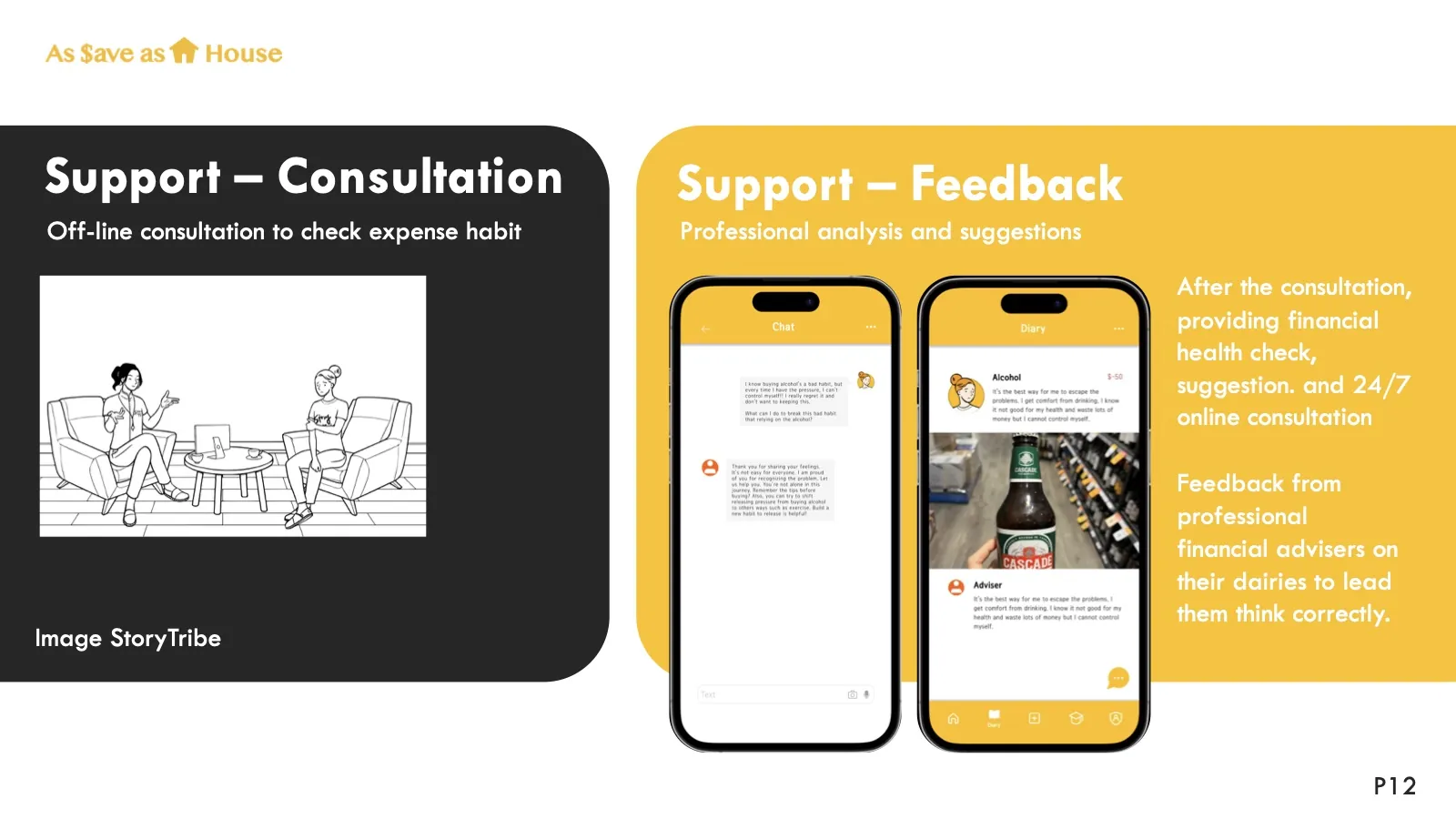
- 支持:線下理財諮商、財務健檢,以及理財顧問對日誌的即時回饋與 24 小時線上支援
- 教育:線上影音課程,培養長期的理財能力
- Design: one app that brings together expense tracking, a diary, consultation and courses
- Inform: expense tracking and a reflective diary to help them see their spending anew
- Support: in-person financial consultations and health checks, plus advisers’ immediate feedback on diaries and 24/7 online support
- Educate: online video courses that build lasting financial skills
這套行為改變的思考方式,我也延伸寫成方法論〈活動不只是熱鬧:以行為改變視角設計服務〉。
I later expanded this way of thinking about behaviour change into a methodology essay, “More Than a Lively Event: Designing Services Through a Behaviour-Change Lens.”
跨越障礙與競爭Barriers and competition
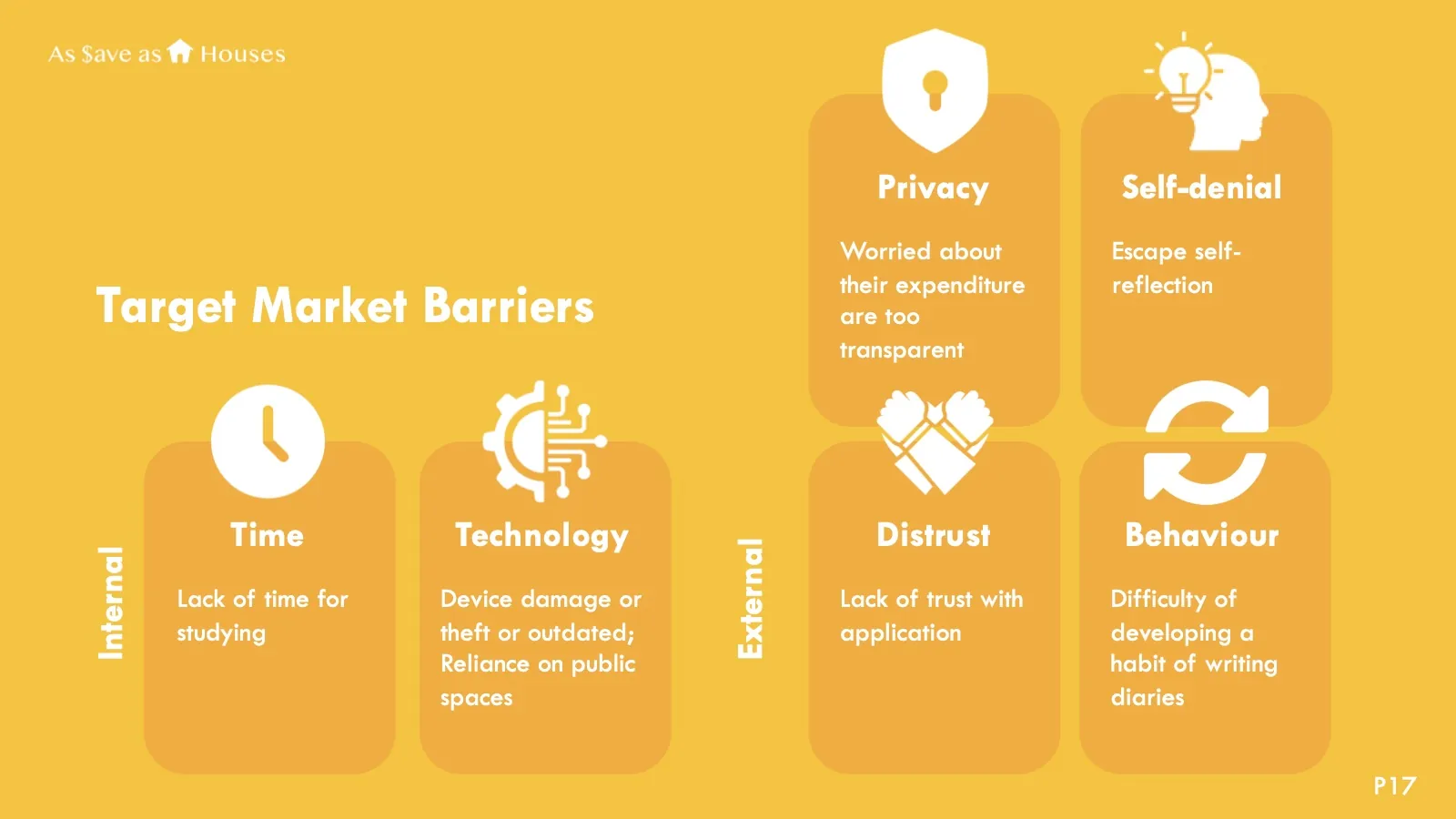
我們也盤點了阻礙改變的因素。內在障礙是時間與科技:他們沒時間學習,手機可能損壞、遭竊或過舊,只能依賴公共空間的設備,所以服務必須操作簡單、技術門檻低。外在障礙則是隱私、不信任、逃避自我反思,以及難以養成寫日誌的習慣,因此需要即時的支持來維持動力。最大的競爭對手,是維持原本生活模式的輕鬆,以及來自同儕的影響。
We also mapped what stands in the way. Internal barriers are time and technology: no time to learn, phones that break, get stolen or are outdated, and reliance on devices in public spaces — so the service had to be simple and low-tech.External barriers are privacy, distrust, avoiding self-reflection and the difficulty of building a diary habit, which call for immediate support to sustain motivation.The biggest competitors: the ease of keeping the old routine, and the influence of peers.
品牌、通路與推廣Branding, channels and promotion
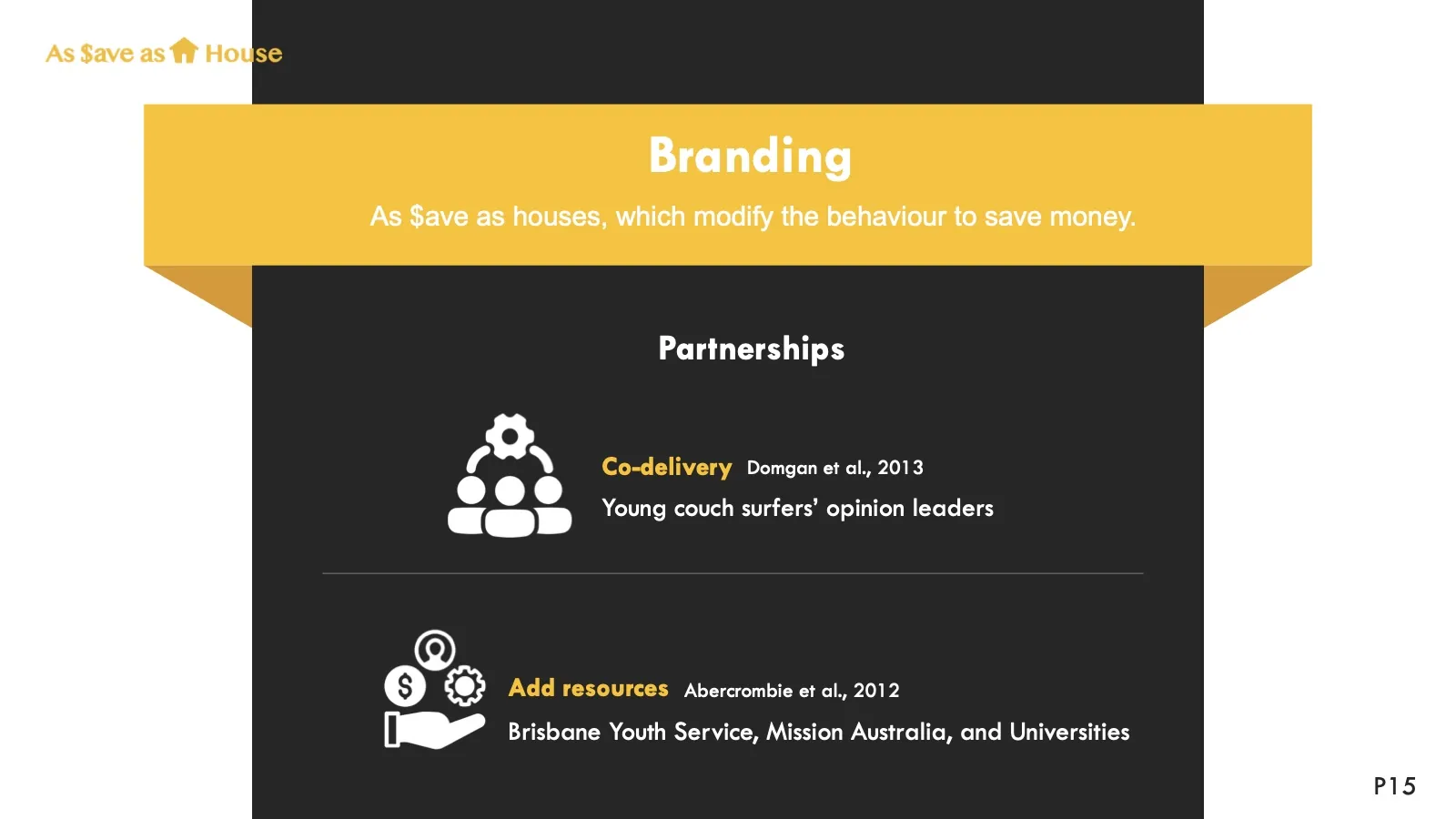
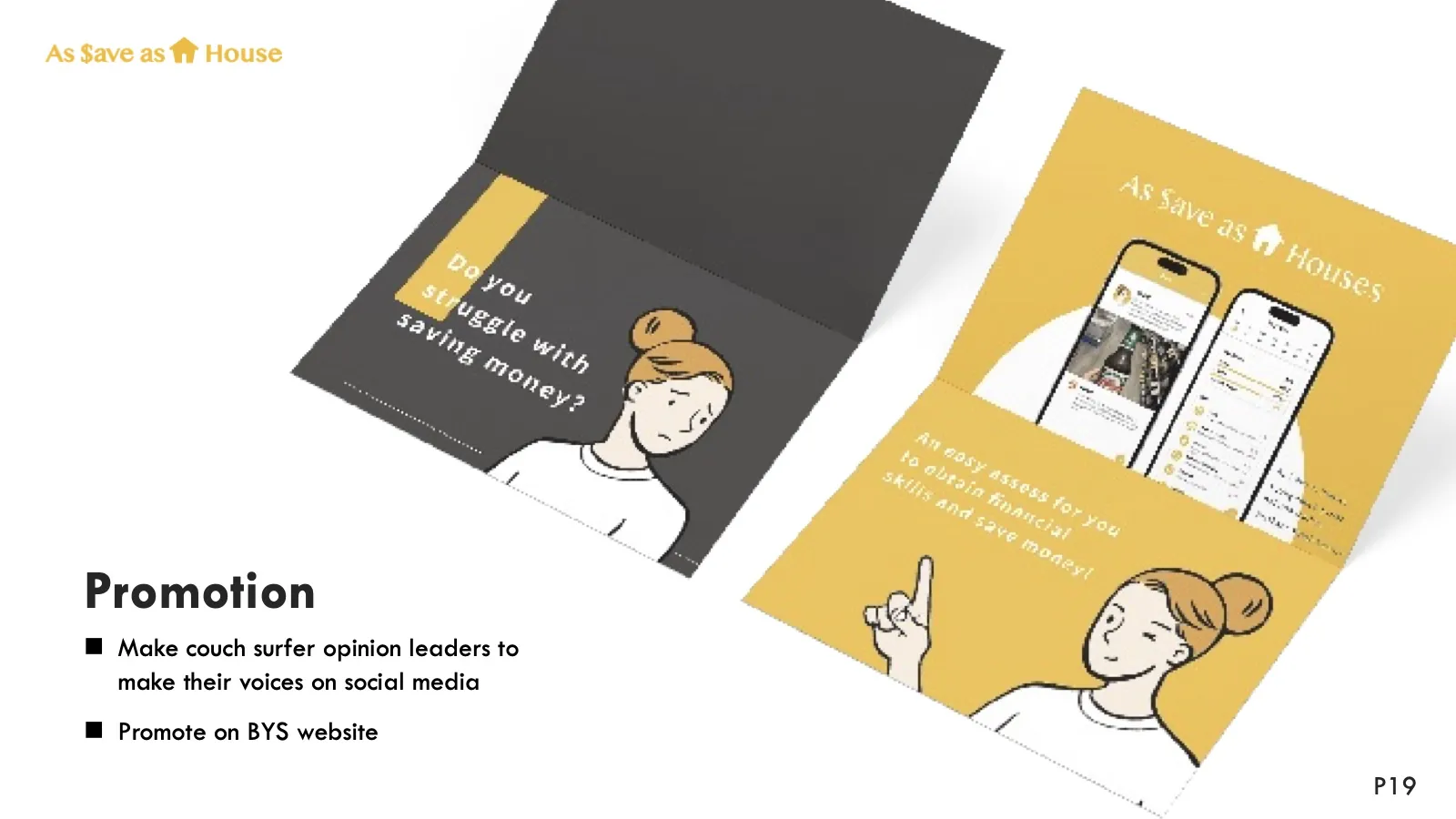
我們與布里斯本青年服務中心(Brisbane Youth Service)、Mission Australia 及大學合作,共同提供服務並挹注資源,並邀請沙發衝浪青年中的意見領袖在社群媒體發聲。通路涵蓋社工、Brisbane Youth Service、Instagram 與 Facebook 社團。海報則運用儀式感設計,以同理他們的處境為出發點。
We partnered with Brisbane Youth Service, Mission Australia and universities to co-deliver the service and add resources, and invited opinion leaders among young couch surfers to speak up on social media.Channels included social workers, Brisbane Youth Service, Instagram and Facebook groups. The poster used ritual design, starting from empathy with their situation.
評估計畫Evaluation plan
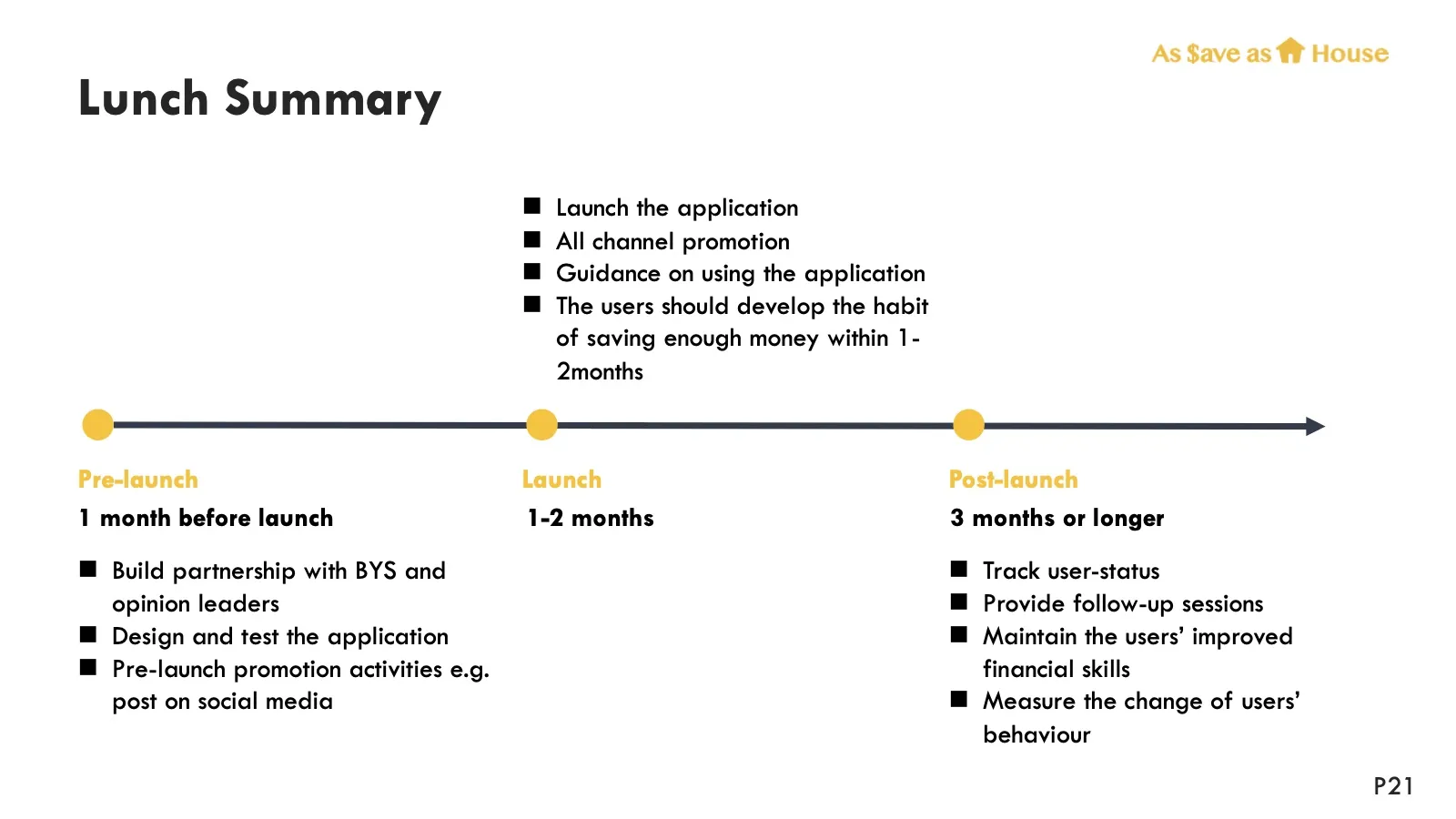
我們依旅程階段設計評估方式:直接指標是每日日誌,以及成功存下 25% 收入的人數;中介指標是 App 使用人數、心理健康程度與購買藥酒的頻率;間接指標則是租到公共住宅的人數。質性評估上,在思考期與準備期蒐集服務人員的軼事回饋,行動期組成 4–5 人的焦點團體讓同儕互相鼓勵,維持期與退出期則與每位參與者進行深度訪談。
We designed the evaluation around the journey stages. Direct indicators: daily diaries and the number of people who save 25% of their income. Intermediary indicators: app users, mental-health levels and how often they buy drugs and alcohol.The indirect indicator: the number renting public housing. Qualitatively, we gather anecdotal feedback from service staff during contemplation and preparation, form focus groups of 4–5 so peers can encourage each other during action, and hold in-depth interviews with every participant at maintenance and exit.
社會行銷的倫理The ethics of social marketing
我檢視了這個提案可能帶來的四個倫理挑戰:
I examined four ethical challenges the proposal could raise:
- 保姆國家:日誌、即時回饋與定期諮商,把「存錢是通往穩定生活的唯一路徑」強加給他們,但賺更多錢也是一條路,有些人可能更適合。
- 羞恥喚起:海報的儀式感設計本意是同理,卻忽略了他們的心理健康,反而可能引發負面態度,讓他們逃避這個議題。
- 責怪受害者:我們把沒錢歸因於花錢買藥酒,卻很少討論其他利害關係人的責任。如果能改變同儕的態度與行為,也可能帶動他們改變。
- 歸咎個人:我們只處理了下游。要真正緩解無家可歸這個棘手問題,必須同時考慮上游與中游,例如邀請政府成為夥伴,以補助緩解住房危機。
- The nanny state: diaries, instant feedback and routine consultations impose the idea that “saving is the only path to a stable life” — yet earning more is another route, and some may be better suited to it.
- Shame arousal: the poster’s ritual design was meant to show empathy, but it overlooked their mental health and could instead trigger negative feelings that make them avoid the issue.
- Victim blaming: we attributed their lack of money to spending on drugs and alcohol, but rarely discussed other stakeholders’ responsibility. Changing peers’ attitudes and behaviour could also help them change.
- Culpability: we only worked downstream. To truly ease the wicked problem of homelessness, upstream and midstream must be considered together — for instance, bringing government in as a partner to ease the housing crisis with subsidies.
課程團隊Course team
課程|Marketing for Social Change
Course | Marketing for Social Change
教授|Dr Kumudu Jayawardhana
Lecturer | Dr Kumudu Jayawardhana
團隊|Yu-Hsuan Liu, Xi Deng, Jo-Chieh Huang
Team | Yu-Hsuan Liu, Xi Deng, Jo-Chieh Huang